
How to Choose an Honest Waterproofing Contractor in Malaysia
How to vet a waterproofing contractor before paying a deposit — what a proper inspection covers, what a quote must itemise, real warranties and warning signs.
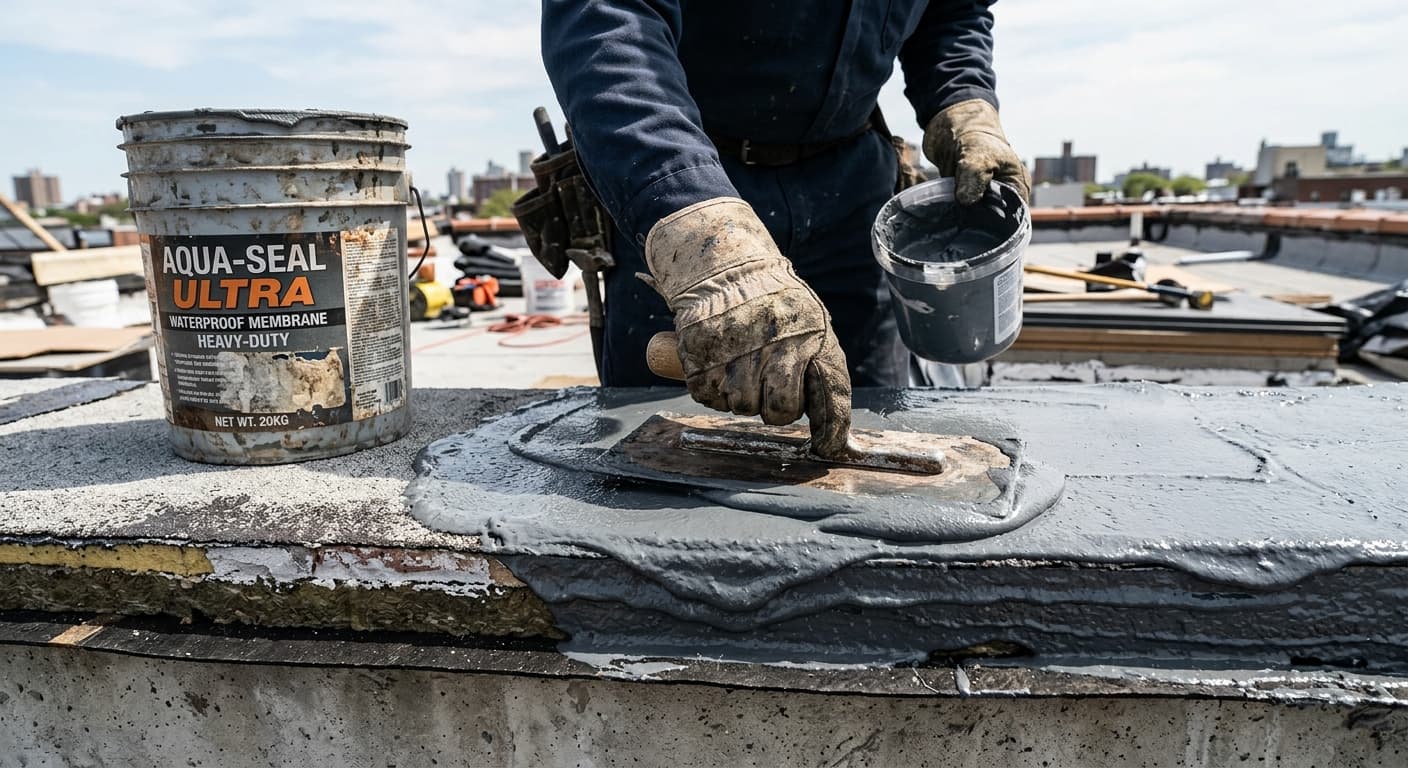
The expensive part of waterproofing is not the material — it is paying twice because the first job failed within one rainy season. You can filter out most weak waterproofing contractors before they ever climb onto the roof, just by watching how they inspect and how they write a quotation.
This guide covers what a proper site inspection looks like, what a written quote must itemise, which warranties actually mean something, deposit norms in Malaysia, and the warning signs that should end the conversation.
What a Proper Site Inspection Looks Like
A contractor who quotes over WhatsApp after seeing one photo of your ceiling is guessing. The number may look attractive, but it is not based on anything.
A proper inspection takes 30 to 60 minutes and covers three places, not one:
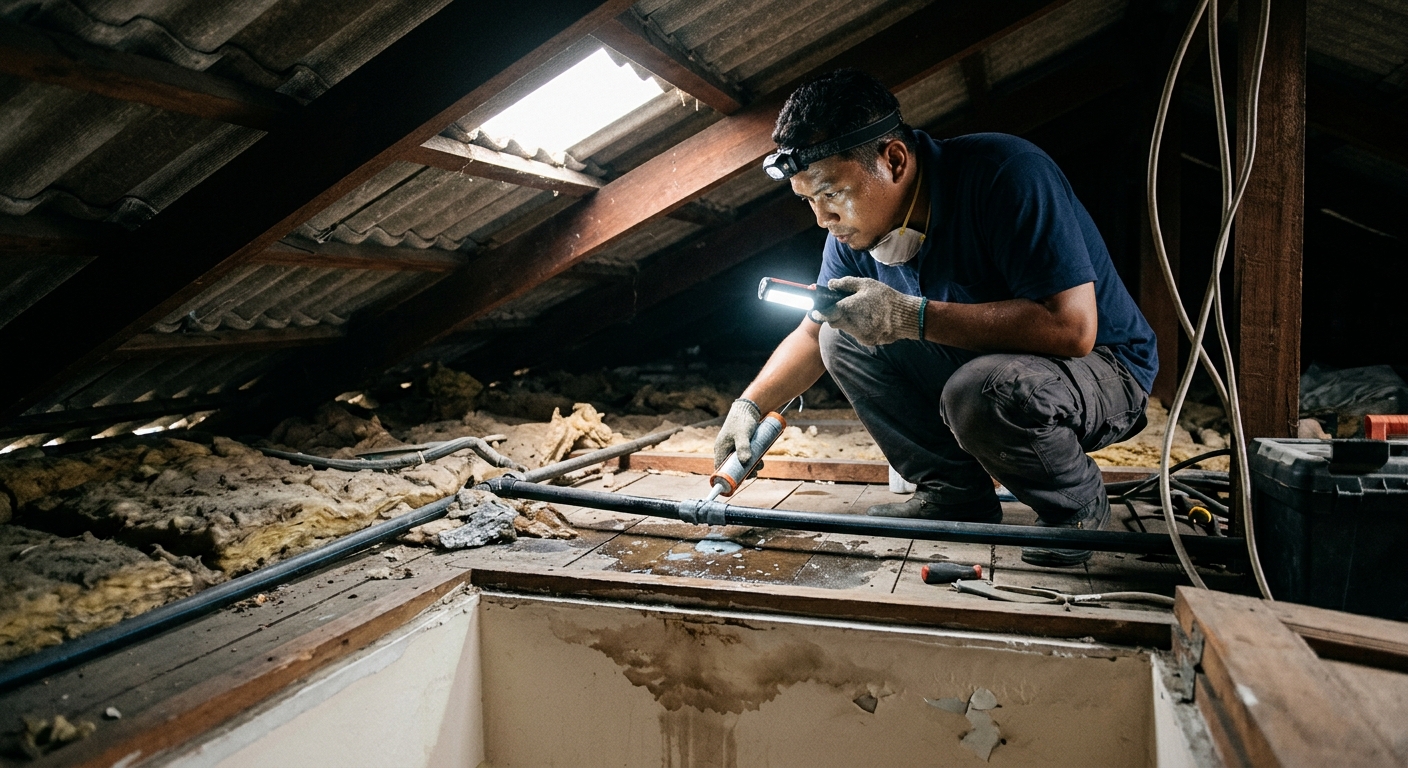
- On the roof. He has to go up and look — fall towards the outlets, standing water, the state of the seams at the parapet, the condition around pipes and antenna brackets.
- Inside the house. The patch gets measured and marked, and where there is access, the ceiling void gets checked. Water rarely drips where it entered.
- Around the house. External walls, window sealant and the upstairs bathroom — so other possibilities are ruled out before roof work is proposed.
Good sign: he takes photos and shows them to you, uses a moisture meter, and talks about the cause before he talks about materials. Weaker sign: a product name and a price per square foot inside the first five minutes.
If the source is not obvious after a visual check, an honest contractor will suggest a 24-hour ponding test first — even though that means coming back a second time.
What a Written Quotation Must Itemise
"Roof waterproofing — RM6,500, 7-year warranty" is not a quotation. It is a number, and a number with no detail cannot be compared with another number.
Ask for all of this in writing before you agree:
- The measured area in square feet, and the rate per square foot. Without it you cannot compare two quotes at all.
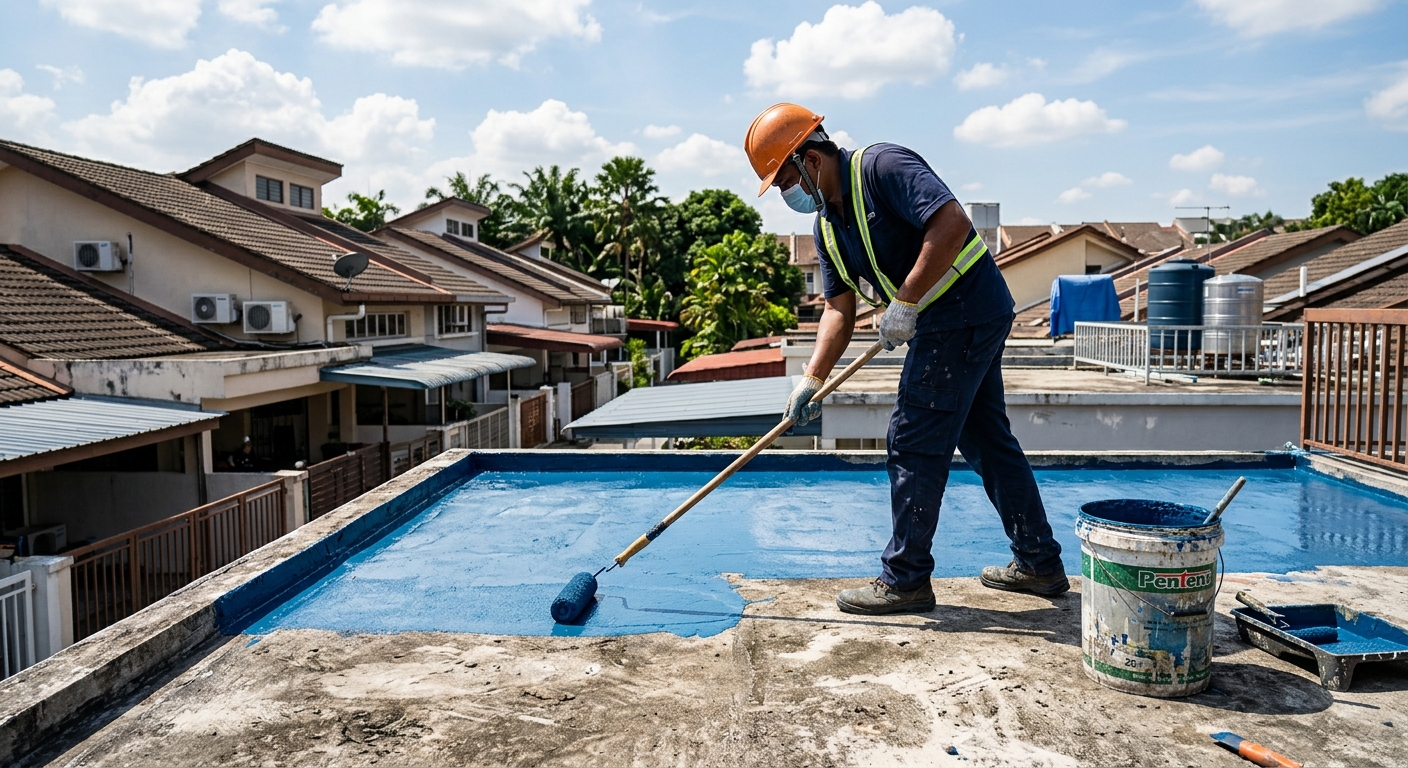
- The system and manufacturer name — for example 3 mm torch-on membrane of a stated brand, or a two-component polyurethane coating. "High-grade imported material" is not a specification.
- Number of coats and wet/dry film thickness, plus the primer used. Most failures come down to one coat that was too thin.
- The surface preparation — pressure washing, stripping the old layer, cutting out cracks, new screed to fall where needed. This is usually 30–40% of the real work, and the first thing a cheap quote drops.
- Edge details — how high the membrane turns up the parapet and walls, and how pipes and outlets are dressed. Failures start at edge details, almost without exception.
- A ponding test on completion, with the duration stated.
- Duration of works, site cleaning, and disposal of the old layer.
- Company name, SSM registration number and address on the quotation letterhead.
When two quotes differ by RM4,000, the answer is nearly always in that list — usually surface preparation, coat count, or edge details. For market ranges, see our roof waterproofing cost guide.
Warranties That Mean Something vs Empty Ones
A long warranty is easy to promise verbally and hard to claim. What separates them is what is written down.
What a real warranty looks like
It is on company letterhead with an SSM registration number, and it states the covered area clearly — "main roof, 1,200 sq ft", not "the said house".
It defines what counts as failure (water entering through the treated area), the response time after you report it, and whether the repair is at no cost. It also lists exclusions openly: new structural damage, third-party work on the roof, outlets blocked through lack of maintenance.
Realistic terms: 5 years for coating systems, 7 to 10 years for a full membrane with complete surface preparation. A 15-year-plus warranty should make you ask what exactly is covered.
What an empty warranty looks like
Mentioned only verbally, or written as one line on a receipt. No registered company name — just a personal mobile number. No sketch or photos of the treated area, so nobody can prove a new leak is in the same place.
A clause like "warranty void if anyone goes on the roof", with no further explanation, also weakens your claim, because almost every house has someone up there for an antenna or a water heater.
Deposit Norms and Payment Schedules
Contractors do need a deposit — waterproofing materials are bought before work starts. What matters is the amount and the structure.
Common practice in Malaysia for residential work:
- 30–50% deposit on confirming the job. More than 50% before any material arrives is worth questioning.
- Balance on completion, after the ponding test passes and you have seen the work yourself.
- For larger jobs, staged payments against progress (preparation done, first coat done, full completion).
Payment should go to a company bank account, not a personal account or e-wallet, and every payment should have an invoice. This is not a formality — without a payment record to a registered entity, your warranty is close to unenforceable.
Keep photos at each stage too. It protects both sides if there is a dispute later.
Warning Signs Worth Walking Away From
None of these prove bad intent, but each one is a reason to slow the decision down.
- No company registration. Ask for the SSM number and check it. A registered company can still be reached next year; a phone number cannot.
- Cash only, no invoice. No record means no warranty you can actually claim.
- Pressure to decide today. "This price is only for today" has nothing to do with technical work. Your roof will not change in 48 hours.
- A quote given without going onto the roof. That is a guess, and guesses usually get corrected later as extra cost.
- A price far below everyone else. Usually one thin coat with no surface preparation — it looks fine for one season.
- Unwilling to name the material. Good materials have names, technical data sheets and manufacturer warranties.
- A big deposit to start "tomorrow morning". Busy crews have schedules; a crew that is completely free tomorrow deserves a closer look.
- Promising it will "last forever". No waterproofing system lasts forever under Malaysian sun and rain. An honest contractor gives you a service life, not an absolute promise.
Six Questions to Ask Before You Sign
Ask all of these by message so the answers are in writing. How a contractor answers tells you as much as the answers themselves.
- What do you think is causing this leak, and what led you to that conclusion?
- Which system and brand will you use, how many coats, and at what thickness?
- What surface preparation is included in this price?
- How high does the membrane turn up at the parapet, and how are pipes and outlets dressed?
- Can I see the written warranty before I pay a deposit?
- If it leaks again next year, who comes, how soon, and who pays?
If all six are answered plainly, you are probably dealing with the right people. If the questions get dodged, or answered with "don't worry, we have done many houses", keep looking.
We work exactly the way described above: roof inspection first, a written quote listing system, coats and surface preparation, a ponding test before final payment, and a written warranty with the area stated. See our coverage in Bangsar or Mont Kiara, and book an inspection before the rainy season starts.
WhatsApp us for a site inspection and a written quote.