
Roof Waterproofing Cost in Malaysia (2026 Guide)
What roof waterproofing costs in Malaysia by system, what pushes the price up, and the five items every waterproofing quote must spell out.
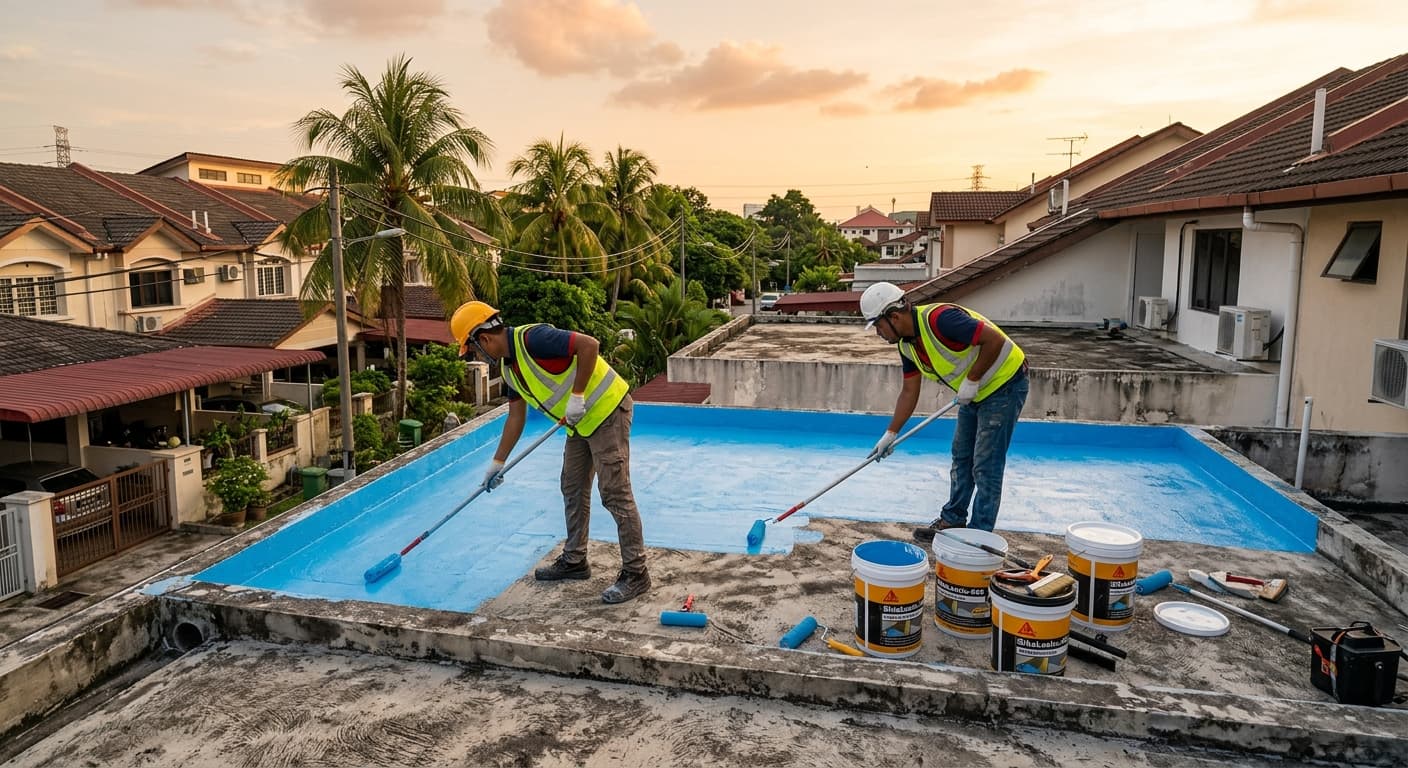
Price is the first question almost every homeowner asks. The honest answer: roof waterproofing in Malaysia usually lands between RM4 and RM15 per square foot depending on the system, with a minimum charge of roughly RM1,000 to RM1,800 for small jobs. This guide explains what you are actually paying for, what pushes the price up, and how to compare two quotes that look wildly different.
Roof waterproofing price range in 2026
Malaysian pricing comes two ways: a rate per square foot for a full roof, or a lump sum for a localised patch. Both are legitimate, but the per-square-foot rate is far easier to compare between contractors.
Typical rates per square foot
- Acrylic coating: RM3.50 – RM6 per sq ft — cheapest, 3 to 5 year service life
- Cementitious (polymer-modified slurry): RM4 – RM8 per sq ft — good on concrete with little movement
- Polyurethane (PU) coating: RM7 – RM12 per sq ft — flexible, seamless, 7 to 10 years
- Torch-on bitumen membrane: RM8 – RM15 per sq ft — toughest, 10 to 15 years with a protective screed
Small jobs and patch repairs
For a localised leak — one parapet junction, around a single outlet, or a water-tank footing — most contractors charge a minimum of RM1,000 to RM1,800 even though the actual area is tiny. That covers mobilisation, labour and the material pack that gets opened. If someone quotes RM300 to come and fix a roof leak, there is usually a reason.
A double-storey terrace roof in an area like Bangsar is typically 400 to 700 sq ft of flat concrete, so a full PU job normally works out somewhere between RM3,000 and RM8,000.
Cost by waterproofing system
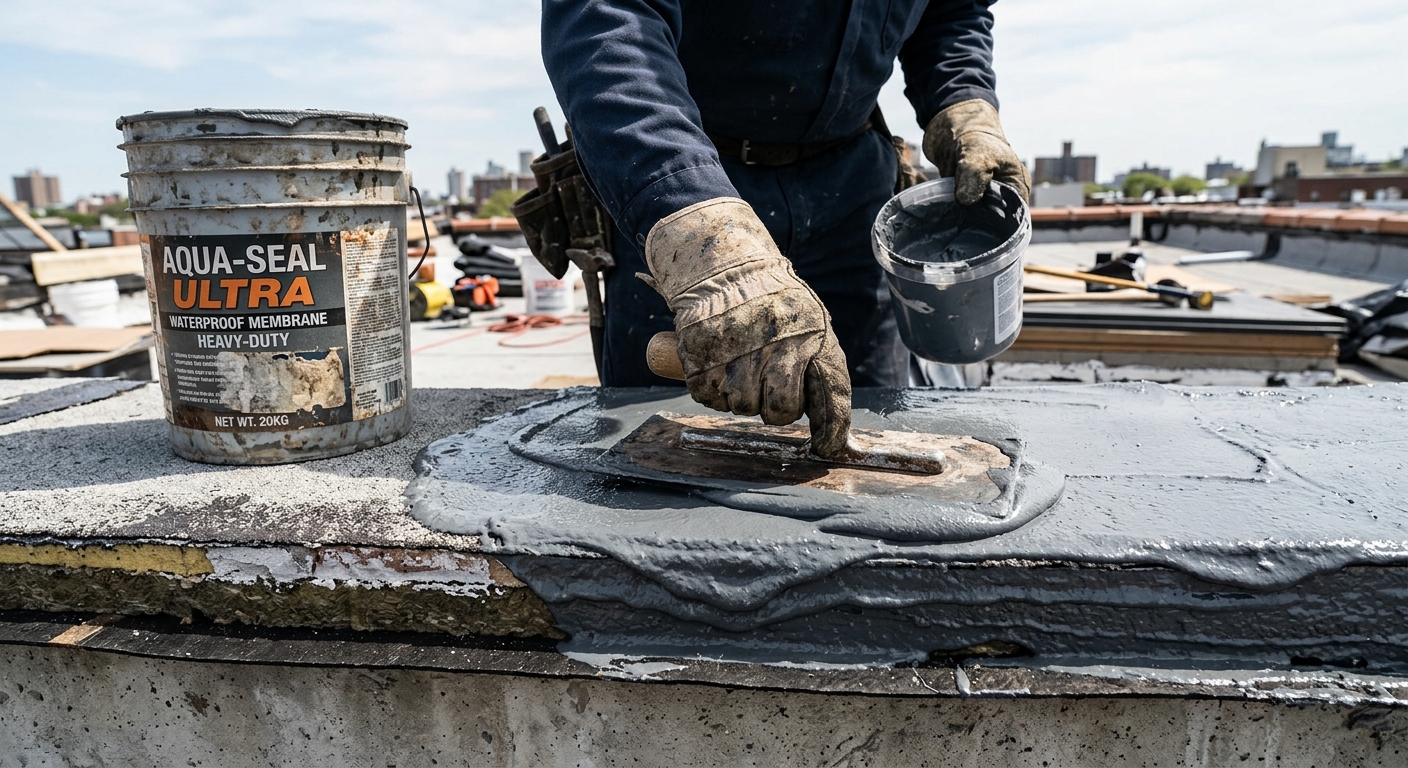
The price gap between systems is not only about material quality. It is also about how much preparation each one needs and how long it lasts before you do it again.
Acrylic coating — cheapest, shortest life
Rolled on like a thick paint, quick and simple. Suited to a roof that is still in good shape and just needs UV protection and light water resistance. It is a poor choice where water ponds, because acrylic does not tolerate standing water for long.
Cementitious — great on concrete, less flexible
Polymer-modified cement slurry bonds extremely well to concrete and can be applied to a substrate that is still slightly damp. The trade-off is that it is fairly rigid, so it will not follow an active crack. We use it often on concrete roofs and bathroom floors.
PU coating — the most common middle choice
Polyurethane goes on as a liquid and cures into a single seamless rubber layer. No seams means no weak edges, and it stays flexible enough to absorb daily thermal movement. This is the usual pick for residential flat concrete roofs.
Torch-on membrane — most expensive, most durable
Bitumen sheets are heat-welded down with overlaps. It is strong and long-lasting, but it needs a skilled crew because every overlap is a risk point. It also needs a protective layer on top if the roof gets walked on. For the full comparison, read membrane vs coating waterproofing.
What pushes the price up
Two roofs of the same area can differ in price by a factor of two. Here is why.
Removing the old layer
If the existing waterproofing has blistered, it has to be scraped off and carted away. That can add RM1 to RM3 per square foot including disposal. A quote that says nothing about removal is usually assuming a simple overlay.
Slope correction and screeding
A roof that ponds needs a new screed to form a fall towards the outlets. That is concrete work, not waterproofing work, and it can add a few thousand ringgit. Without it, any system laid on top will fail early.
Number of penetrations and edges
Every pipe, water-tank foot, antenna post and wall abutment needs its own detailing and reinforcement. A small roof with eight penetrations can cost more than a large empty one.
Access and height
A terrace roof you reach by ladder is the cheapest case. Three-storey buildings, or roofs that need a skylift, scaffolding or rope access, add mobilisation cost. That shows up clearly in dense areas like KLCC, where even parking the lorry is a problem.
How to read a contractor's quote
The cheapest quote is not always the most expensive in the end, but it often is when it leaves out the items below.
Five things a quote must state
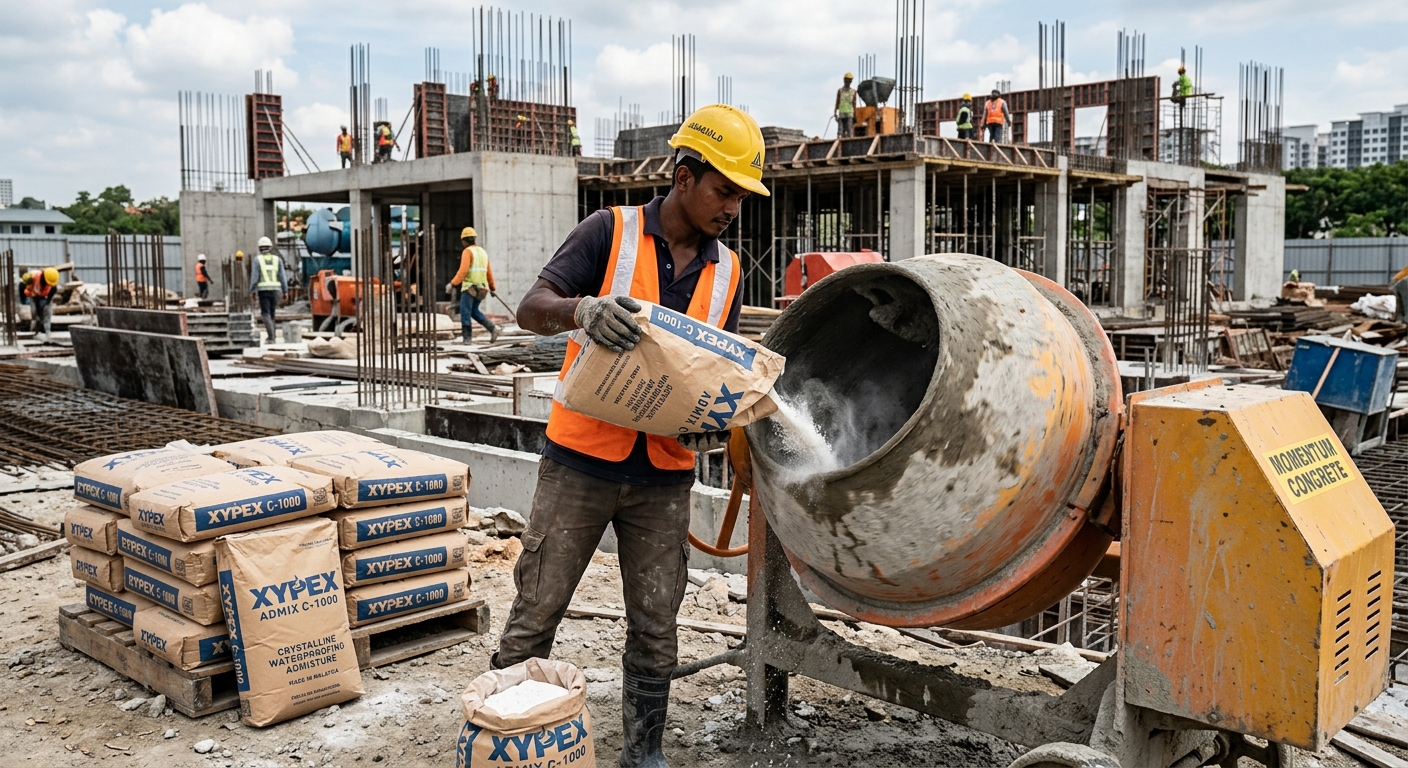
- The exact system and product name, not just the word "waterproofing"
- Number of coats and the target dry film thickness
- Whether the old layer is removed or overlaid
- Detailing for edges, parapet junctions and penetrations
- A 24 to 48 hour ponding test before handover
Warranty — read the exclusions
A 5 to 10 year warranty is normal for PU and membrane systems. What matters is the exclusions: new structural cracks, third-party damage, and roofs walked on without a protective layer are usually excluded. A verbal warranty is worth nothing once the company has wound up.
When the cheap price is genuinely the right one
If your roof is young, has no ponding, no cracks, and simply needs periodic protection, a cheap acrylic coating is the correct choice. The problem is when a cheap coating is sold as the answer for a roof with structural damage. Our guide on how to choose a waterproofing contractor helps you tell the two apart.
Want a number for your own roof? Send the rough area and two or three photos over WhatsApp and we will give you a price range before we come to site — WhatsApp Us.
Frequently asked questions
How much does it cost to waterproof a terrace house roof?
For the flat concrete portion of a double-storey terrace, expect RM3,000 to RM8,000 for a full PU system, or RM1,000 to RM1,800 for a localised patch. The real figure depends on the area, the condition of the old layer and the number of penetrations.
Do I pay for a site inspection?
Most contractors, ourselves included, do not charge for a basic inspection and quote in the Klang Valley. Moisture testing or a detailed written report may be billed separately.
Can I stage the work to spread the cost?
Yes, if the roof has clearly separate areas — a kitchen roof independent of the main roof, for example. Splitting one continuous surface into two phases is not advisable, because the joint between old and new work becomes a weak point.
Do prices rise during the monsoon?
Material rates do not change, but schedules tighten and jobs take longer because crews wait for a dry substrate. Book ahead if you can — the drier months are the better window.