
How Long Does Roof Waterproofing Last + Maintenance Schedule
Real service-life ranges for cementitious, PU coating and torch-on membrane, what shortens them, and a yearly inspection routine any building owner can run.
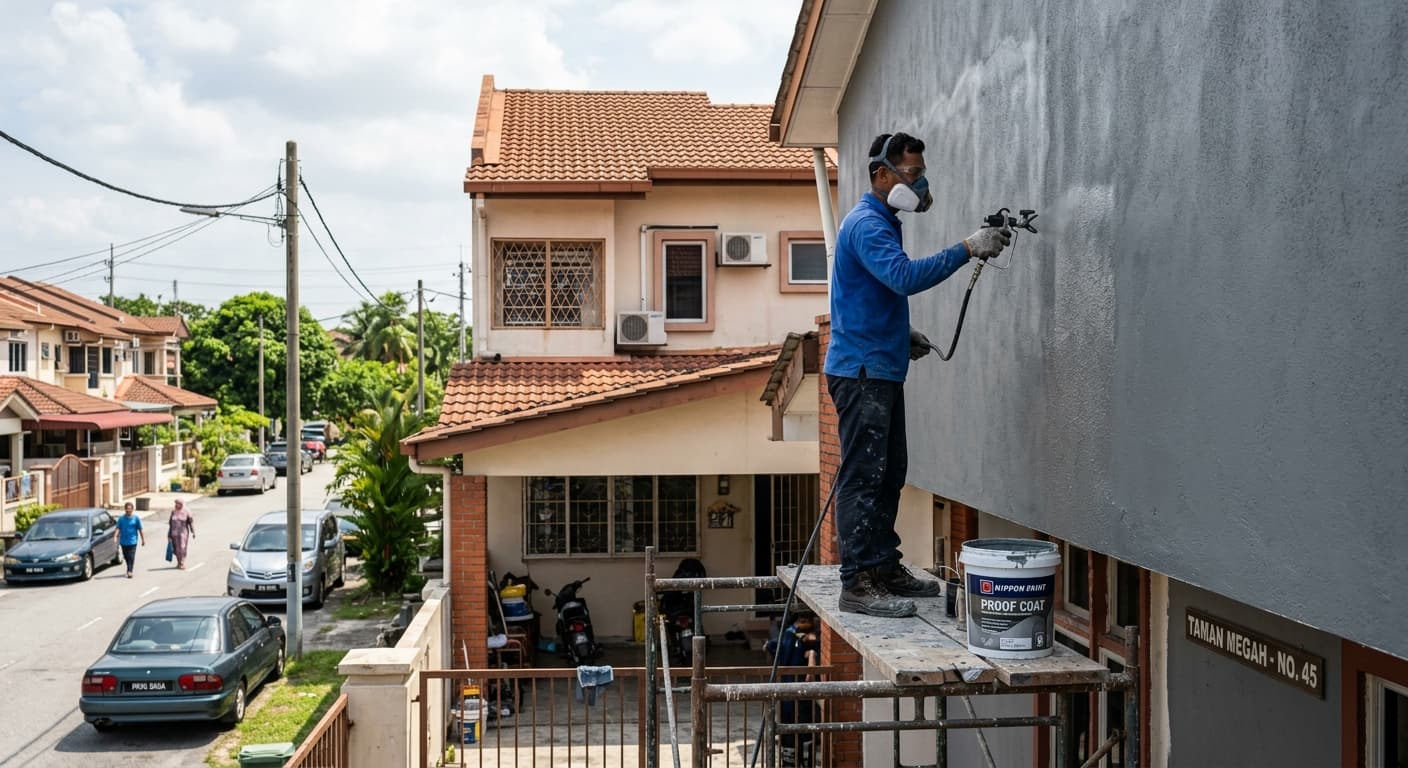
The first question every building owner asks after the job is done: how long will this last. The honest answer is anywhere from 3 to 20 years — depending on the system installed, the roof's fall, and whether anyone maintains it at all. A cementitious layer buried under bathroom tiles can outlive the tiles above it, while an acrylic coating baking in full Malaysian sun may already be thin at year five. Below are the real service-life ranges per system, why systems fail early, and a yearly inspection routine you can run yourself without calling a contractor.
Real service life of each waterproofing system
There is no single number that covers everything. Each system has its own physical weak point — some fail on UV, some fail on structural movement. The ranges below are what we see in the field on Malaysian concrete flat roofs, not what the manufacturer's brochure claims.
Cementitious (modified cement slurry): 5–10 years
Strong, affordable, and bonds directly to concrete — but rigid and not UV stable. It only reaches the top of that range when it stays protected under tiles, screed or a protective layer. Applied exposed on a flat roof, it usually starts hairline cracking within two to three years.
Acrylic coating: 3–7 years
The most common system on terrace-house and shoplot flat roofs because it is cheap and fast to apply. The catch is that it is thin: vertical UV plus heavy rain erodes the film a little at a time. Treat it as a layer that is meant to be recoated, not a one-and-done install.
Two-coat PU with topcoat: 7–12 years
More flexible than acrylic, so it bridges fine cracks that move with temperature. It only lasts if a pigmented topcoat goes over it — bare PU chalks and hardens after two monsoon seasons.
Torch-on bitumen membrane (3–4 mm): 10–20 years
The longest-lasting option for concrete flat roofs, and the usual choice on condo podiums and factory roofs. But its life is decided almost entirely by workmanship at the overlaps and the upstands against parapet walls — not by the thickness of the roll. Good membrane with an 80 mm upstand still leaks in three years.
Sealants and flashing: 2–5 years
These fail first, usually while the main membrane is still healthy. That is why leaks so often start at aircond bracket feet, pipe penetrations and flashing edges rather than in the middle of the roof.
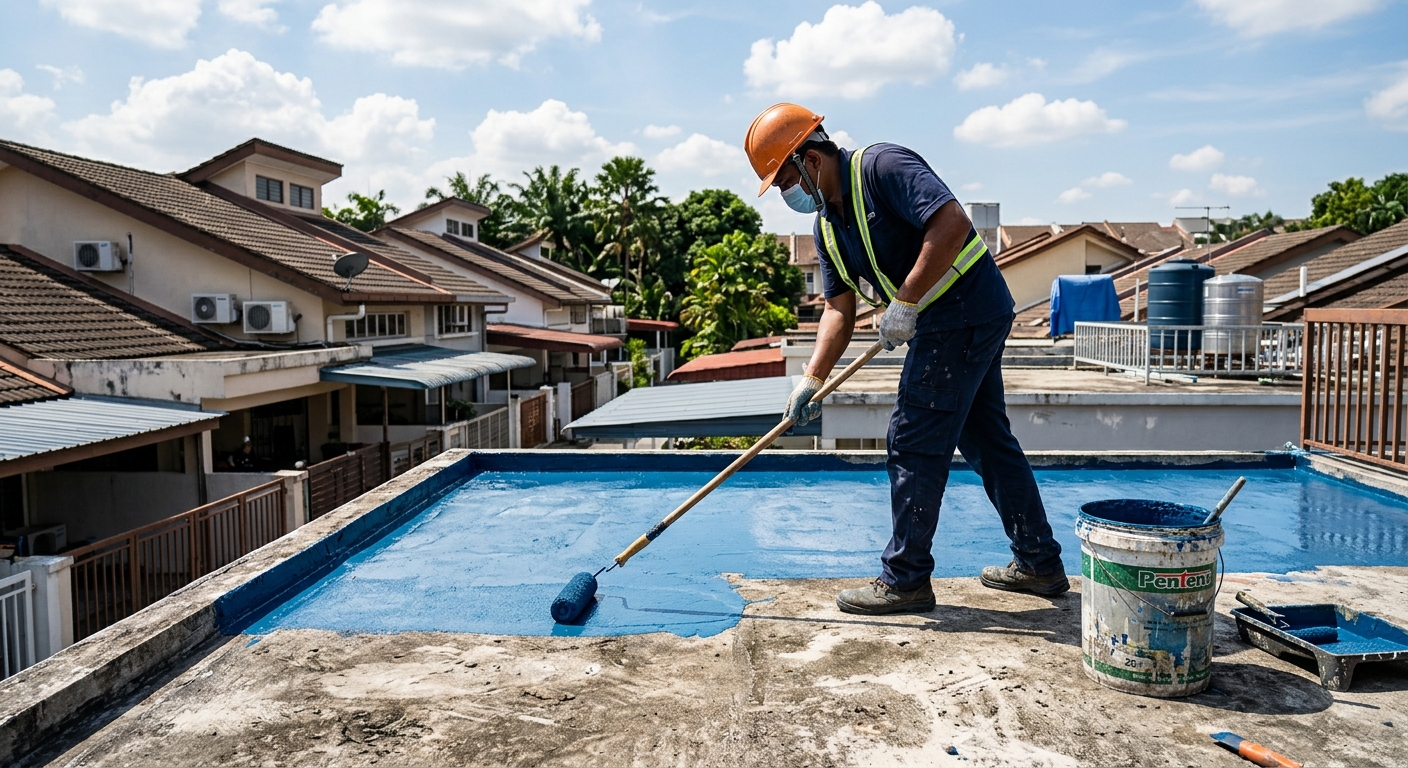
What shortens the life of roof waterproofing
When a system fails at half its expected life, it is almost always one of five things. All five are visible to the eye, no instruments needed.
Ponding water
This is the number one killer. A fall flatter than 1:100, or a single outlet choked with leaves, is enough to turn a roof into a shallow pond. Water still sitting 24 hours after the rain stops can halve a coating's life — it softens the film and keeps pushing into every pinhole continuously.
Foot traffic
Flat roofs rarely stay empty. They become the aircond technician's walkway, the ladder spot, the storage area. Membrane or coating without screed or protective tiles gets scuffed, punctured and worn along the same line over and over. If your roof genuinely needs to be walked on, ask for a protected walkway in the scope.
No UV topcoat
Vertical Malaysian sun is harsher than most people assume. A layer with no pigmented topcoat fades, chalks, then goes brittle — and a brittle layer cannot move with the concrete when it expands at midday.
Structural movement and cracks
Live cracks (at slab joints, at the base of parapet walls) must be detailed as a joint with reinforcing tape, not simply coated over. Coated over, they split again in the same line within one monsoon.
Rushed surface preparation
Applied over damp, dusty or previously painted concrete, adhesion fails on day one. The early sign is blistering — palm-sized bubbles you can press in. Once those appear, the system's lifespan is already set.
A yearly maintenance schedule you can actually follow
Waterproofing is not a fit-and-forget product. The routine below takes under an hour a year and usually catches problems while the fix still costs hundreds of ringgit rather than tens of thousands.
Every three months — and after every heavy downpour
- Clear every roof outlet and gutter: leaves, silt, nests.
- Check whether water is still standing a day after rain. Mark where.
- Move anything being stored on the roof — it traps water and hides damage.
Once a year, before the monsoon
- Walk the whole roof slowly on a dry day. Look for blisters, hairline cracks and lifted edges.
- Check every upstand: parapet walls, aircond bracket feet, every pipe penetrating the slab.
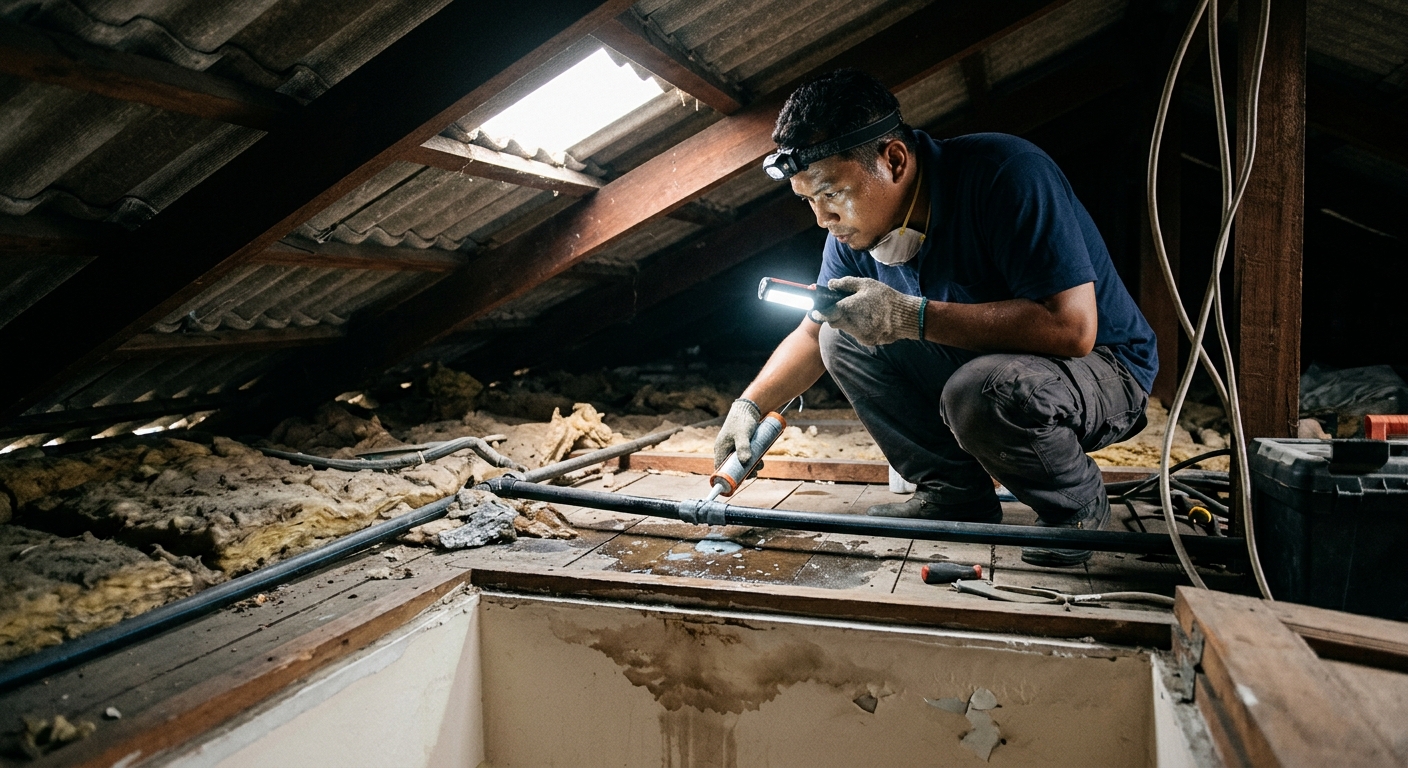
- Check the ceiling below even when it is dry — yellow staining or flaking paint means water got in before.
- Take dated photos. A year-on-year comparison beats memory every time.
Every three years
On coating systems (acrylic or PU), recoat the UV topcoat. It is the cheapest item on this list and the one that adds the most years to the original system.
Every five to seven years
Get a contractor in for a full inspection. If there is any sign of a leak, ask for a 24-hour flood test on the suspect area — that is the only way to be sure before a new layer goes over an old problem.
When patching still pays, and when to redo
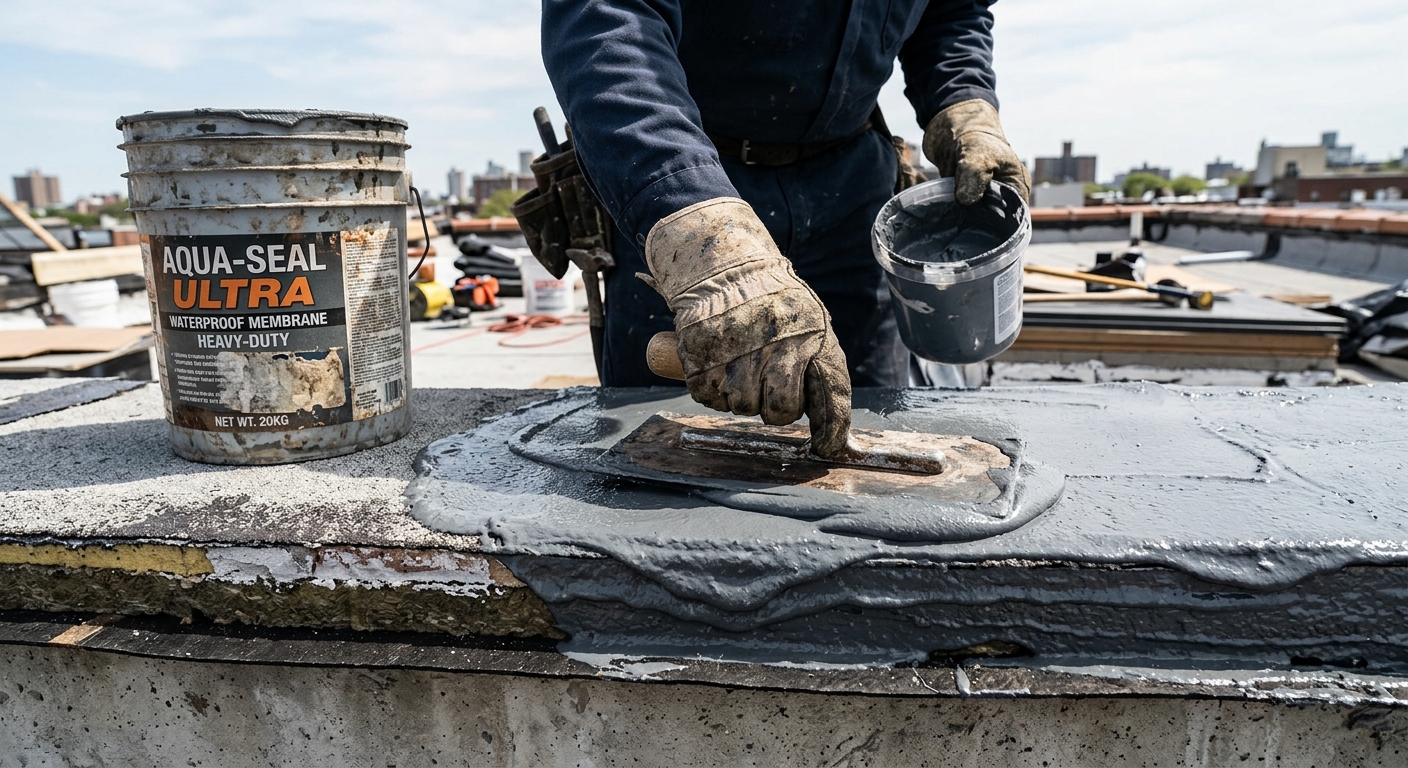
Local patching makes sense when the damage is genuinely local. It wastes money once the base layer has lost adhesion across the whole roof.
Patching still pays when
- Less than 10% of the roof area is affected.
- The surrounding layer is still well bonded — you cannot pick it off with a fingernail.
- The leak traces back to one identifiable point: one upstand, one pipe, one crack.
- The system is still within the service life listed above.
Redo it when
- Blistering is widespread, or the layer peels away by hand in sheets.
- Leaks show up in several separate places within one season.
- There are already two or three old layers stacked up — heavy, moisture-trapping, and nothing new will bond to it with confidence.
- The system is past its service life and you want to leave the roof alone for the next five years.
If you are still comparing systems before making that call, read our comparison of membrane versus coating first.
Long-term cost: cheapest is rarely the thriftiest
The honest way to judge a quote is not the install price but the cost per year of protection. Rough market ranges in Malaysia, for a concrete flat roof with normal access:
- Acrylic coating: roughly RM6–RM12 per square foot, for 3–7 years.
- Two-coat PU with topcoat: roughly RM10–RM18 per square foot, for 7–12 years.
- Torch-on membrane with protection: roughly RM15–RM28 per square foot, for 10–20 years.
Divide price by years and the expensive-looking system usually lands in the same band or lower — before counting repainted ceilings, trade callouts and lost rental days every time it leaks again. Real pricing also moves with roof access, the condition of the old surface and the number of upstands, so treat these as a starting point. There is a fuller breakdown in our roof waterproofing cost guide.
Need your roof checked?
If you are not sure what system is up there now, or when it was last touched, start with an inspection before the next monsoon. We check the fall, the outlets, every upstand and the condition of the existing layer, then tell you whether you need a patch, a fresh topcoat or full works — not every roof needs the big job.
See our scope and coverage on the home page, or go straight to your area such as Cheras if you want to know the team's schedule there.
WhatsApp us for a site inspection and a written quote.