
Commercial Building Waterproofing in Malaysia — What Is Different
Phasing, night access, hot works permits, M&E coordination, warranties, and why the cheapest tender on a commercial roof usually costs more within two years.
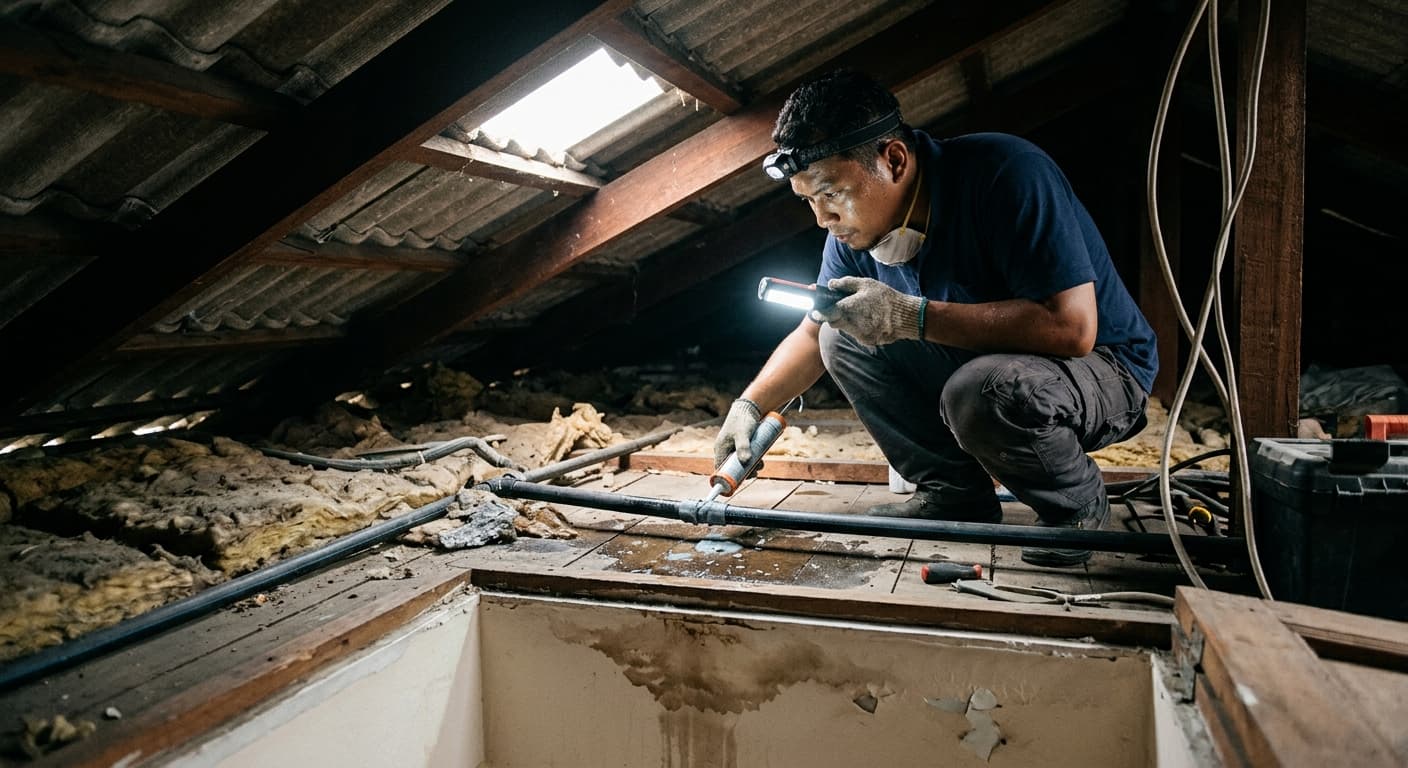
Commercial waterproofing is not just a bigger version of a house job. The materials can be identical — torch-on membrane, PU, cementitious — but what changes is that you are working on top of a building that is still operating, with tenants below, restricted access hours and paperwork that has to be handed over. That is why two quotes for the same 20,000 sq ft roof can differ by a factor of two, and why the cheapest tender so often turns out to be the most expensive two years later. Here is what genuinely differs on commercial work — condo podiums, factory roofs, multi-storey shoplots and office buildings.
Scale and phasing on a building that is still running
A house roof can be opened up and finished in two or three days. A 20,000 sq ft commercial roof cannot — and more importantly, it should never be fully opened at once. One monsoon afternoon over an exposed slab is enough to flood the tenant space below.
Work is split by bay, not by day
An experienced contractor breaks the roof into phases of roughly 300–500 square metres, following structural lines and outlet positions. Each phase is taken to watertight on the same day — primer, membrane, laps, upstands — before the next one is opened. If a quotation says nothing about phasing at all, that is the first question to ask.
Testing before moving to the next phase
Each phase should pass a 24-hour flood test and be signed off before protective screed or tiles go on top. Once the screed is down, any mistake underneath becomes a demolition job — double the cost and the tenants get disrupted twice.
Fall and outlets are usually part of the scope
In older buildings the real cause of leaks is often a near-flat fall and too few outlets, not the membrane. On commercial work that means extra screed to build up the fall, and sometimes new outlets — work a cheap tender stays quiet about.
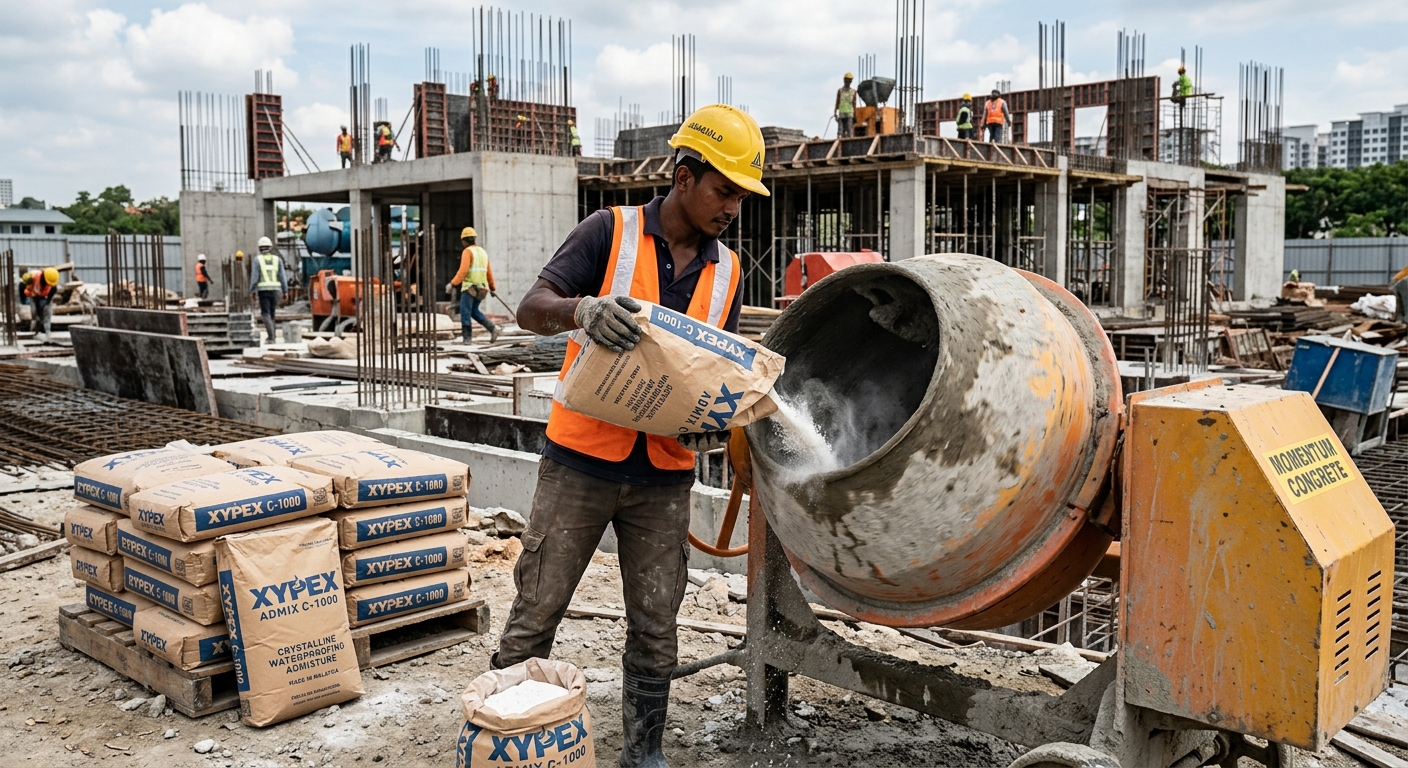
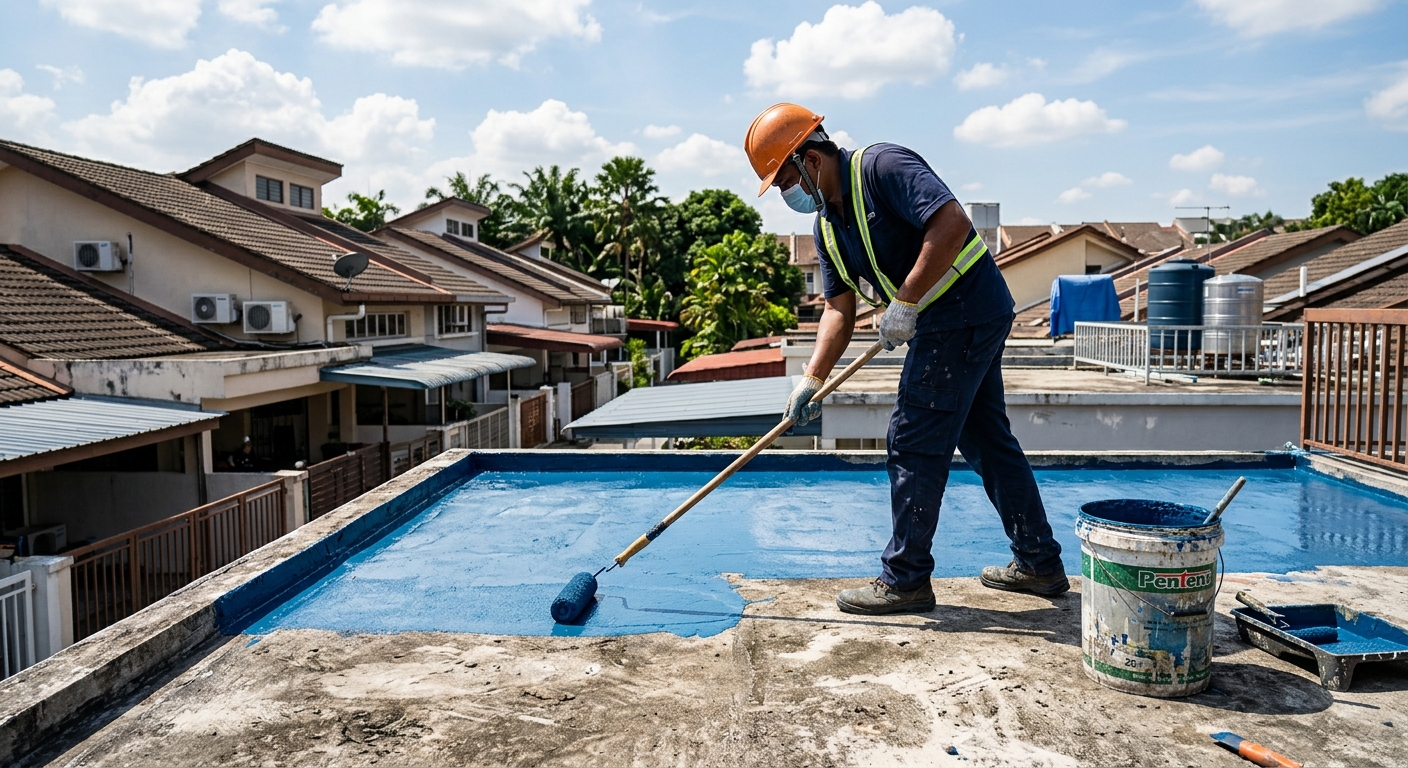
Night and weekend access
In shoplots, malls and office buildings, noisy and fume-producing work cannot happen during trading hours. That changes the price, not just the schedule.
Permitted working hours belong in the scope
Building management usually allows roof work from 10pm to 6am, or weekends only. Night productivity is lower — temporary lighting, no full view of the surface, and night dew that stops you installing over a damp substrate. Assume a slower progress rate, and do not trust a programme built on daytime speeds.
Hoisting routes and service lifts
Material has to go up: membrane rolls, primer drums, gas cylinders. Service lifts have weight limits and booking slots, and some office buildings in dense areas like KLCC only release the loading bay at set hours. A quote that never asked about the lift or the hoist route has not seen the site.
Protecting tenant areas
Working above occupied space means temporary ceiling protection, floor covering along the haulage route, and dust control. On condo podiums such as Mont Kiara, the work zone also has to stay hoarded off from residents around the clock, not only during working hours.
Safety, permits and site documentation
This is the clearest line between a commercial contractor and a residential one, and the part most often stripped out of a cheap tender.
Hot works and working at height
Torch-on membrane means open flame on a roof — that requires a hot works permit from building management, extinguishers on the spot, a fire watch during and after the work, and an area check before the site is left. Work near the roof edge requires harnesses, lifelines and valid anchor points. On many older roofs those anchor points simply do not exist and have to be provided.
Documents that should arrive before work starts
- A method statement written for that roof, not a generic copy.
- A risk assessment (HIRARC) covering hot works and work at height.
- Worker list, insurance, and proof of working-at-height training.
- Product data sheets and a system confirmation letter from the material supplier.
Daily logs and photo records
Every phase should carry a daily log and photographs: original substrate condition, moisture readings, primer, each coat, upstand details, and a signed flood test result. For a building manager this is not paperwork for its own sake — it is the only useful evidence when one spot leaks three years later and the warranty question comes up.
Coordinating with M&E penetrations
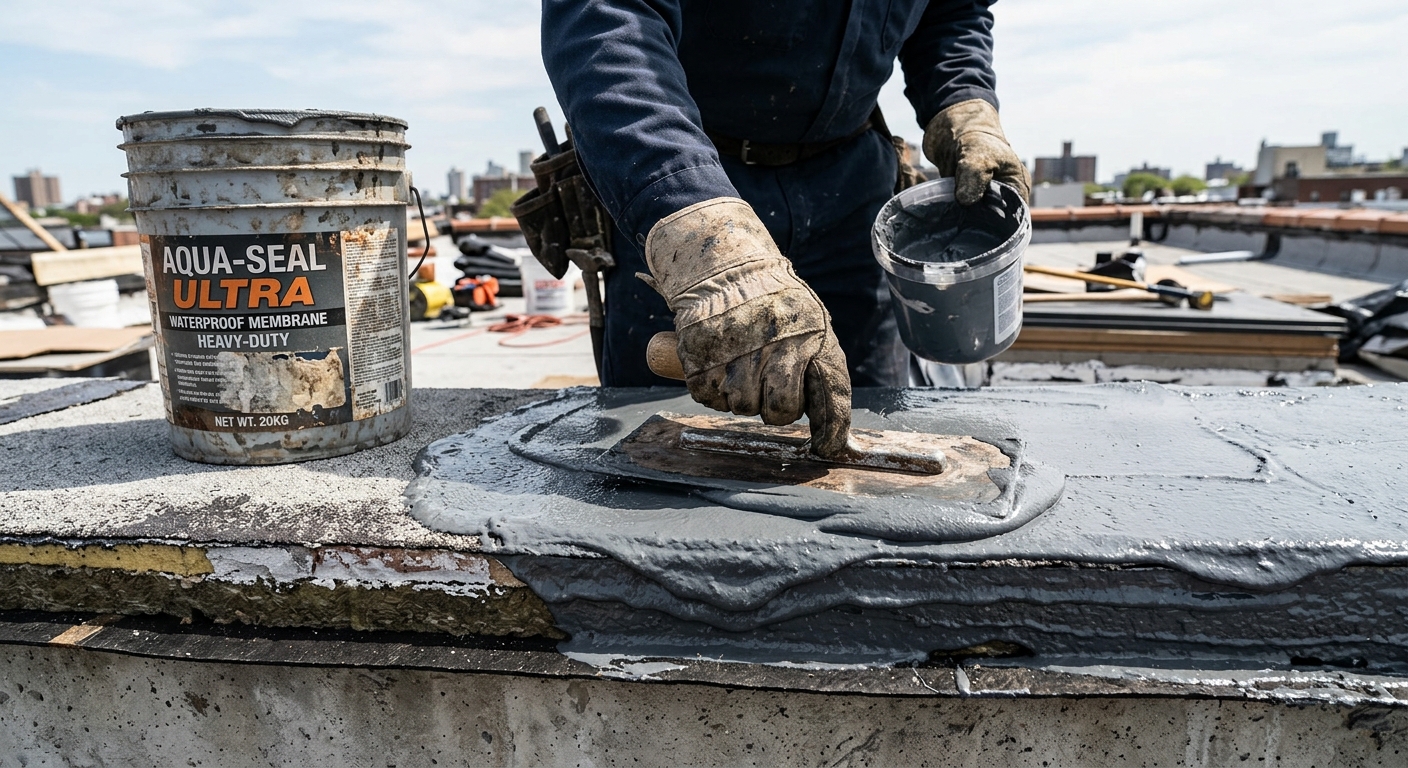
A house roof may have two or three pipes through it. A commercial roof can have fifty: exhaust pipes, aircond bracket feet, cable trays, solar panel feet, sanitary stacks, rainwater downpipes. Every one is a potential leak point.
Every penetration is a detail, not a brush stroke
A correct penetration needs a collar, an upstand of at least 150 mm above finished level, reinforcing tape and a sealant compatible with the main system. Simply coated flat around the pipe, it fails within one to two years — far earlier than the membrane around it.
The sequence has to be locked with the M&E contractor
The most expensive problem we see is not poor waterproofing but another trade drilling the roof after it is finished — to mount a new aircond unit or add a pipe. The programme should place all known M&E penetrations before the waterproofing, and building management should have a written rule that no roof drilling happens afterwards without the waterproofing contractor being called back.
Heavy and vibrating equipment
Chiller and condenser bracket feet vibrate and expand. They belong on concrete plinths built before the waterproofing and dressed in with the layers, not bolted straight through a finished membrane.
Warranty and maintenance contracts
On commercial work the warranty is part of what you are buying — and it is worth exactly what is written in it.
What it should state plainly
- The period, typically 5 to 10 years depending on system, and who carries it — contractor, material supplier, or both.
- What is covered: material only, or material and workmanship. A material-only warranty helps very little when the cause is a shallow upstand.
- Exclusions: damage from third-party drilling, blocked outlets from no cleaning, or heavy items stored on the roof.
- Response time: how many days from report to a crew being on site.
An annual maintenance contract earns its keep here
On a large roof, scheduled yearly attention — outlet cleaning, upstand inspection, recoating the topcoat when due — almost always costs far less than one leak event that ruins ceilings, light fittings and a tenant's stock. Many commercial warranties are also conditional on scheduled inspections, so skipping them can void the cover you already paid for.
Why the cheapest tender often costs more later
When one tender comes in far below the rest for the same roof, the difference is almost never efficiency. It comes from what was removed from the scope.
What usually gets cut to hit a lower price
- Surface preparation: no pressure washing, no crack treatment, no primer.
- One coat instead of two, or a lower wet film thickness than specified.
- No protective screed or walkway on a roof that genuinely gets walked on.
- No flood test, because it costs two calendar days per phase.
- Shallow upstands at parapets and penetrations — the easiest thing to trim and the first thing to fail.
- No phasing, which quietly transfers the rain risk to you.
How to compare quotes fairly
Ask every tenderer to state the system by product name, the number of coats and dry film thickness, upstand heights, whether a flood test is included, the phasing plan, and the working hours assumed. Once all three quotes state the same things, comparing price finally means something — and the gap usually closes on its own. Our full guide to vetting suppliers is in how to choose a waterproofing contractor.
The real cost of failure is the tenant's cost
In a commercial building, fixing a leak is not just redoing the waterproofing. It includes damaged ceilings and light fittings, the tenant's stock or equipment, lost trading days, and sometimes a rent rebate. That is how a 15% saving at tender stage disappears entirely in a single incident.
If you are assessing a commercial roof now, start with a site inspection and a written scope before asking for prices — it is the only way three quotes become comparable. See what we cover on the home page.
WhatsApp us for a site inspection and a written quote.