
Membrane vs Coating: Which Roof Waterproofing Suits Your House
Membrane is thick but has laps; coating has no laps but depends on thickness. Here is how to pick the right one for every surface in your Malaysian home.
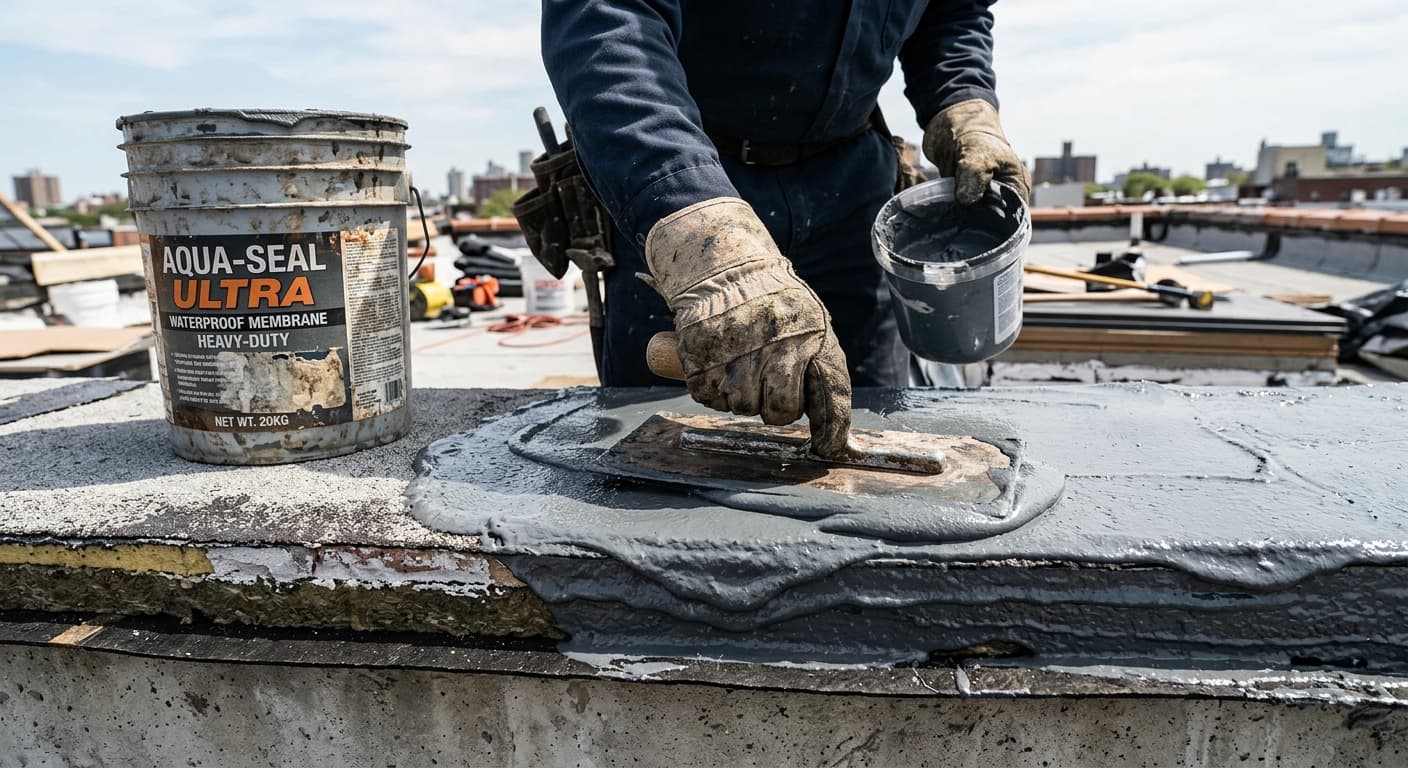
These two words appear in almost every waterproofing quote, and hardly anyone explains the difference clearly. A membrane arrives on site as a sheet at a fixed thickness and is jointed there; a coating arrives as a liquid, is applied on site, and cures into one seamless layer. One's strength is the other's weakness — that is the whole decision.
This guide covers when each is genuinely right for a Malaysian house, and where both of them fail.
What actually separates membrane and coating
A membrane arrives on site as a roll. The common choice for roof waterproofing in Malaysia is 3mm or 4mm torch-on bitumen membrane; there are also self-adhesive types and TPO/PVC sheets for larger projects. Its thickness is decided in a factory, not on your roof.
A coating arrives in a pail. It is brushed, rolled or sprayed — polyurethane (PU), acrylic, or a two-component cementitious slurry. It cures into one layer with no joints at all, and its final thickness depends entirely on how much material actually goes onto the surface.
The difference that matters: joints versus thickness
Membrane wins on thickness but is exposed at its laps. Coating wins on having no laps but is exposed to uneven thickness.
If that sentence makes sense to you, you already understand 80% of this debate. Every failure we open up on site traces back to one of those two weak points.
When membrane wins
We reach for membrane when the area is large, the surface is fairly flat and uncluttered, and water is going to pond after monsoon rain.
Large flat roof slabs
On a 1,000 square foot flat roof with few obstructions, torch-on membrane goes down faster and holds a consistent thickness from edge to edge. It also survives long ponding better, because bitumen is not softened by standing water the way some acrylics are.
Roofs that will be covered over
If the roof will be screeded, tiled or ballasted afterwards, membrane is the better fit. It is thicker, it takes mechanical abuse from tradesmen working on top of it, and it can be shielded with a protection board.
Water tanks, planter boxes and pool surrounds
For anything in permanent contact with water or damp soil, a membrane's factory-set thickness gives a better guarantee than a thin coating applied in a hurry.
When coating wins
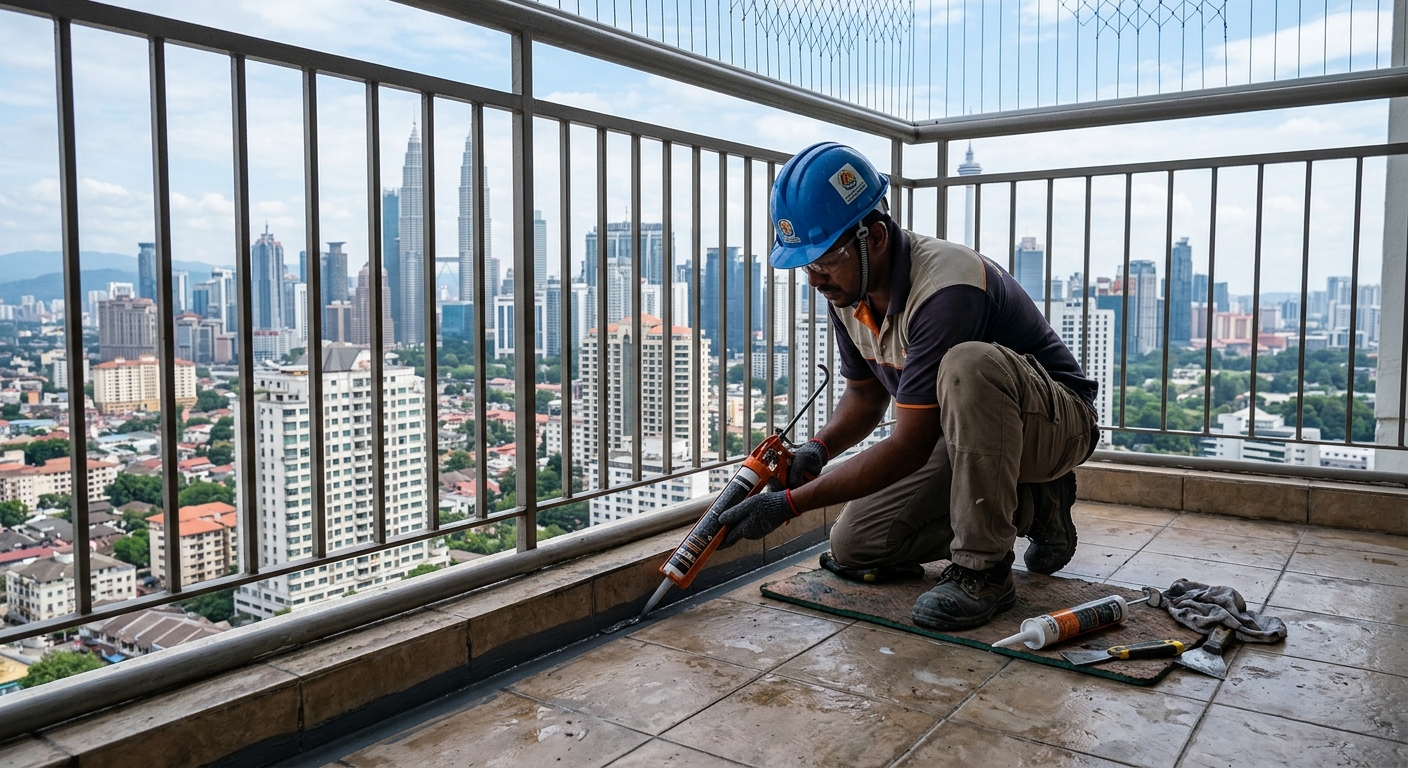
We reach for coating when the surface is complicated, small, or impossible to dress neatly in sheet.
Roofs full of pipes, brackets and corners
Every pipe penetration is one more place where membrane has to be cut and hand-dressed. On a roof crowded with aircon pipes, antenna posts and solar brackets, seamless PU coating is the safer answer — there are no edges for water to get behind.
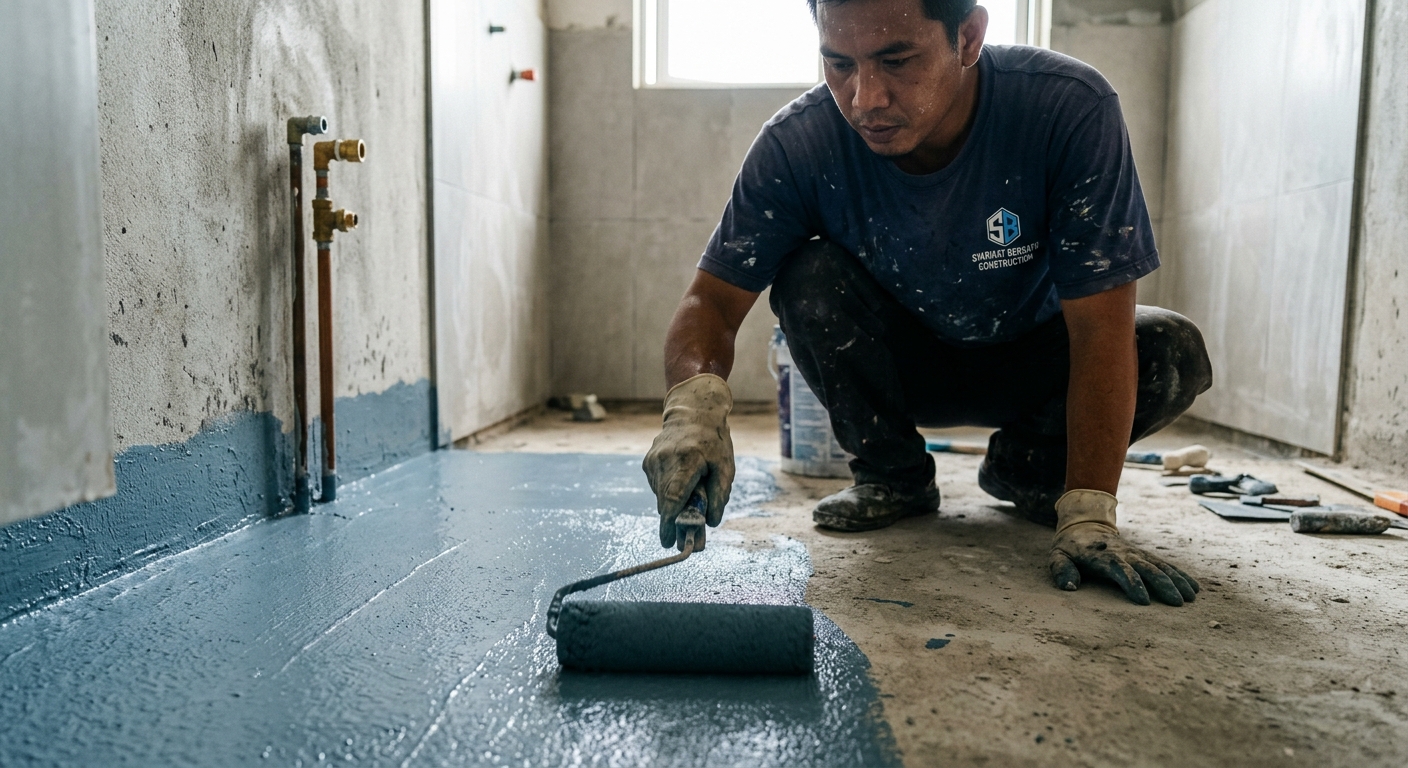
Bathrooms and interior wet areas
Inside a bathroom, a cementitious or PU coating is almost always right. It can be carried up the walls, into every corner and around the floor trap without a single joint. We set out the full layer build-up in our bathroom waterproofing guide.
Metal roofs and surfaces that move
On metal sheeting, an elastic mesh-reinforced coating can absorb daily thermal movement. Rigid bitumen membrane is not the right partner for a surface that moves that much.
Repairs without stripping the old layer
If the old layer is still well bonded and only failing in patches, a coating lets us treat those patches and overcoat the whole area without tearing everything out. Membrane normally means a full strip.
Where both of them fail
This is the part manufacturers' brochures skip. Each system has a predictable way of failing.
Coating fails over moving cracks
Coating spread straight over a live structural crack will split along the same line, usually before the second monsoon. A moving crack has to be opened out, filled and banded with a flexible reinforced detail first — not simply covered.
Coating fails when it is applied too thin
This is the most common failure in the market, and it is not the material's fault. A PU system meant to be built to 1.2mm–1.5mm dry, but laid as one thin coat to save material, will chalk and peel within two to three years.
Membrane fails at laps and parapets
The middle of a membrane almost never leaks. What leaks is a lap that was not torched hot enough to squeeze bitumen out at the edge, and an upstand at the parapet terminated too low or without a groove or flashing. Upstands must run at least 150mm–200mm up the wall.
Membrane fails when left exposed to the sun
Black bitumen membrane left bare under the Malaysian sun hardens and cracks early. It needs an aluminium foil facing, a UV-protective paint, or a covering layer on top.
Cost and lifespan in the Malaysian climate
The figures below are Klang Valley market ranges, including proper surface preparation. A real quote depends on area, access and the state of the existing layer.
- Cementitious slurry: RM8–RM15 per square foot, roughly 5–8 years on a stable substrate
- Torch-on bitumen membrane, 3–4mm: RM12–RM22 per square foot, 8–15 years if protected from UV
- Full PU coating system: RM15–RM28 per square foot, 7–12 years depending on the thickness actually achieved
- Reinforced acrylic on metal roofs: RM6–RM14 per square foot, needs recoating sooner
Notice how wide those lifespan ranges are. The reason is not the material — it is surface preparation, fall, and edge details. We go into what really decides lifespan in how long waterproofing lasts.
What to pick for each surface in your house
This is the recommendation we give on site, with nothing held back:
- Large, open, flat concrete roof that ponds — torch-on membrane, with the fall corrected first.
- Small concrete roof crowded with pipes and brackets — PU coating.
- Bathrooms and wet rooms — coating (cementitious or PU), carried up the walls.
- Tiled balconies and outdoor walkways — membrane or slurry under the tiles, not an exposed coating.
- Metal roofs and awnings — reinforced elastic coating, not membrane.
- External walls letting damp through — an elastomeric wall coating.
In practice, most houses need both. A two-storey terrace in Bangsar or a condo unit in Mont Kiara usually ends up with membrane on the flat roof and coating in the bathrooms and balcony. An honest waterproofing contractor will recommend that mix, not one system for every surface.
WhatsApp us photos of your roof, balcony or bathroom for a first opinion, or book a site inspection so we can measure and recommend the right system for each surface — not the most expensive one.