
Why Your Ceiling Leaks After Heavy Rain — And What Roof Waterproofing Fixes
A brown patch after heavy rain almost always starts on the roof — the three real causes, how to trace yours, and what repairs cost in Malaysia.
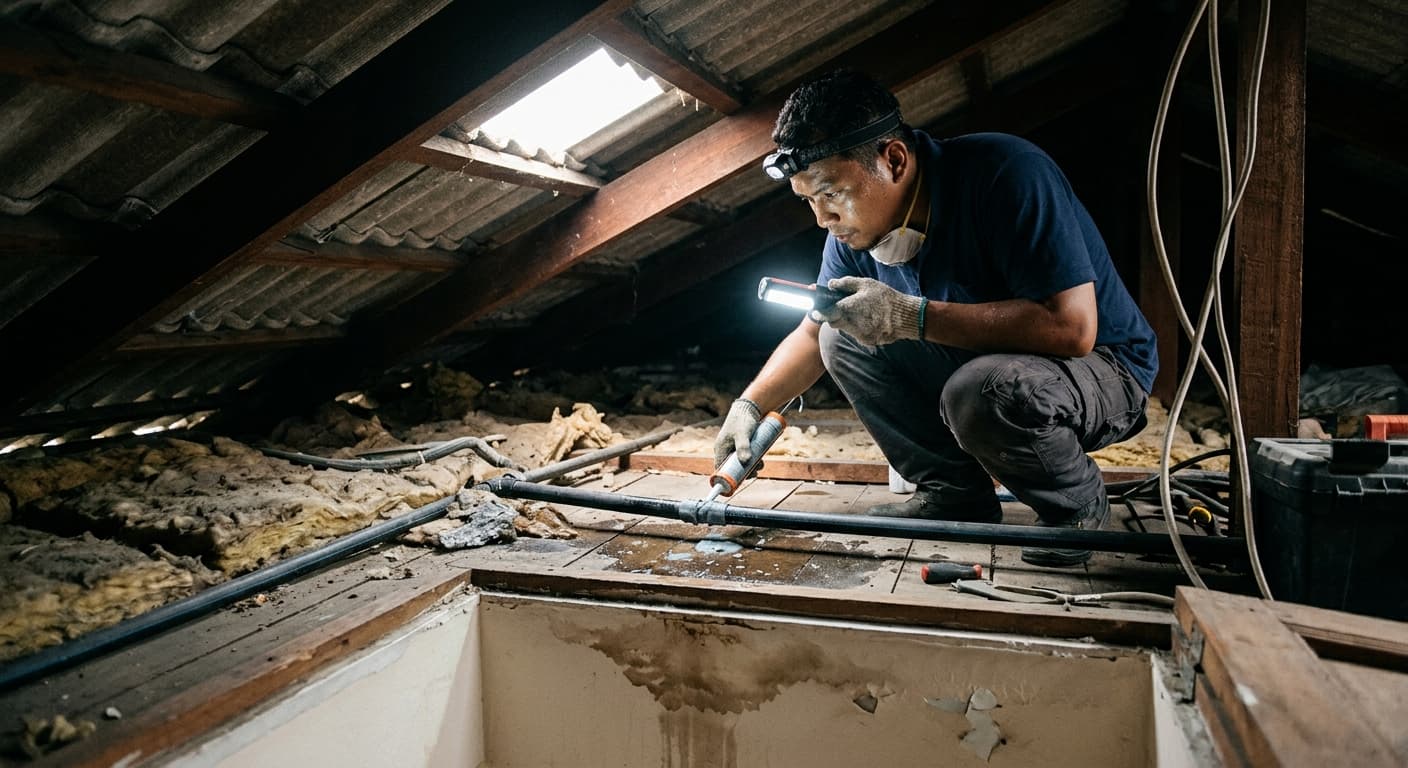
Your ceiling stays dry for weeks, then one night of heavy rain leaves a brown patch that keeps growing by morning. Almost every ceiling leak after rain comes from water sitting on top of the slab, not from rain that was "too heavy". Flat concrete roofs, blocked roof outlets and an aged roof waterproofing layer are the three causes we find most often in Klang Valley terrace houses and condos.
This guide walks through each real cause, how to identify yours before spending money, and what repairs actually cost in Malaysia today.
Three Main Causes of a Ceiling Leak After Heavy Rain
Heavy rain is not the cause. Rain only tests every weakness already sitting above your ceiling. When 60–80 mm falls in an hour, that water has minutes to drain — if it cannot, it settles and finds a way in.
1. Ponding water on a flat concrete roof
A "flat" concrete roof is supposed to have a slight fall towards the outlets. After years of small settlement, shallow pools form that are still wet two days after the rain stops.
Standing water pushes through cracks no wider than a hair. This is the number one cause of ceiling patches in two-storey terrace houses and penthouse units.
2. Blocked roof outlets and gutters
Leaves, silt and bird nests choke the outlet. The water level rises above the lip of the waterproofing layer, then spills in at the side laps — the weakest detail on any roof.
This is the cheapest cause to fix, and the one most often mistaken for "the roof has failed".
3. The waterproofing layer has reached the end of its life
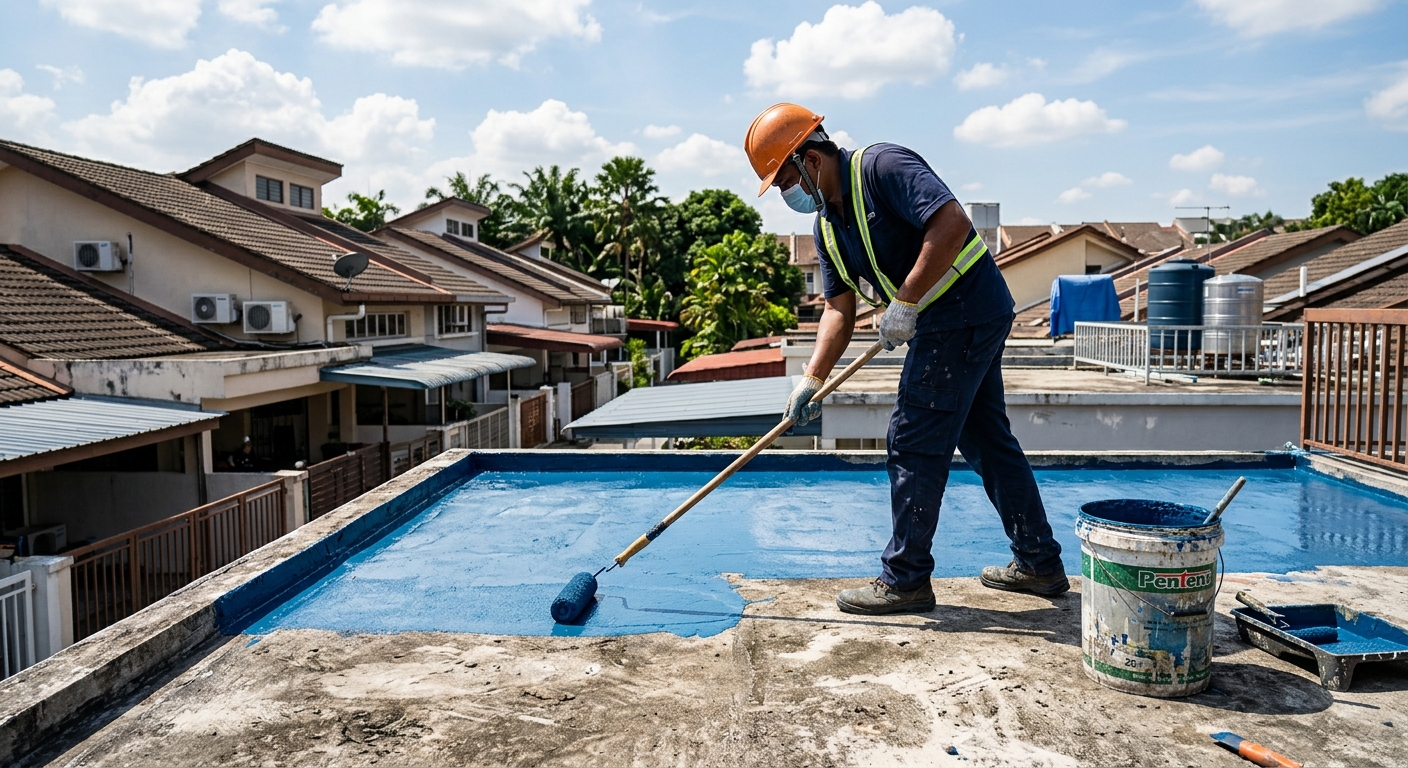
Acrylic coatings typically last 5–8 years under Malaysian sun. Torch-on bitumen membrane lasts longer, around 10–15 years, but its overlap seams can open earlier.
Look for faded colour, a surface that crumbles like a biscuit, blisters, or seams lifting at the parapet. We list every warning sign in signs your roof needs waterproofing.
When the Roof Is Not the Cause
Roughly one in three "ceiling leak" calls we take is not a roof problem at all. Get this wrong and you pay for roof work while the leak quietly comes back.
The upstairs bathroom
If the patch sits directly under a bathroom and stays damp through a dry week, the cause is the bathroom floor, not the rain. The waterproofing under the tiles has failed, or was never there.
Simple test: mark the patch and stop using that bathroom for two days. If it stops spreading, you have your answer.
External walls and window frames
Malaysian monsoon rain comes sideways, not straight down. Wind drives it through plaster cracks and hardened window sealant, and it runs down inside the wall before appearing at a ceiling corner.
The tell: the patch starts at the wall edge rather than mid-ceiling, and only appears when the rain comes from one direction.
Hidden pipes in the ceiling void
A blocked air-conditioner drain or a weeping pipe joint leaves a neat round stain with a yellow ring. That kind of patch has nothing to do with the weather.
How to Find the Real Source Before Repairing
Never let anyone coat the whole roof before the source is confirmed. A coating laid over trapped moisture blisters within months.
This is the order we follow at every house:
- Mark and date the patch. Pencil a line around it and note the date. Now you know whether it is growing, and when.
- Note the timing. Leaking during rain points at the roof or walls. Leaking with no rain points at a pipe or a bathroom.
- Inspect the roof in the rain, or run a ponding test. Outlets plugged, roof flooded 25 mm deep for 24 hours, ceiling watched. This is the most reliable test there is.
- Look inside the ceiling void. Water usually enters far from where it drips — it travels along the slab or a steel bar first.
- Use a moisture meter. It shows how far damp has spread through the plaster, so you know how much has to be opened up.
An honest quotation comes after these steps, not before them.
The Right Waterproofing Method for Each Case
No single material suits every surface. The choice depends on the substrate, how much the structure moves, and whether people walk on the roof.
Flat concrete roofs
Torch-on bitumen membrane is still the most durable answer for a roof that ponds seasonally, provided laps are at least 100 mm and the membrane is turned up the parapet. Polyurethane coating suits complicated roofs with many pipes and upstands.
If the pools never dry, a new screed to create fall comes first. Waterproofing cannot fix a roof that simply does not drain.
Bathrooms and balconies
Here a flexible cementitious membrane is the standard: two coats laid in crossing directions, turned 150 mm up the wall, and flood-tested for 24 hours before tiling. That flood test is not optional — it is the only proof the layer is sound before tiles hide it for good.
Hairline cracks in external walls
Cracks get opened up, filled with repair mortar, then the whole wall takes an elastomeric coating that can stretch. Patching one crack alone rarely works — there are usually others not yet visible.
Repair Cost Ranges in Malaysia
Prices move with roof condition, building height and access. The ranges below are what Klang Valley homeowners commonly see in 2026, not a quotation:
- Clearing blocked roof outlets — RM250–RM600 for a single visit.
- Localised patch to one crack or seam — RM600–RM1,500.
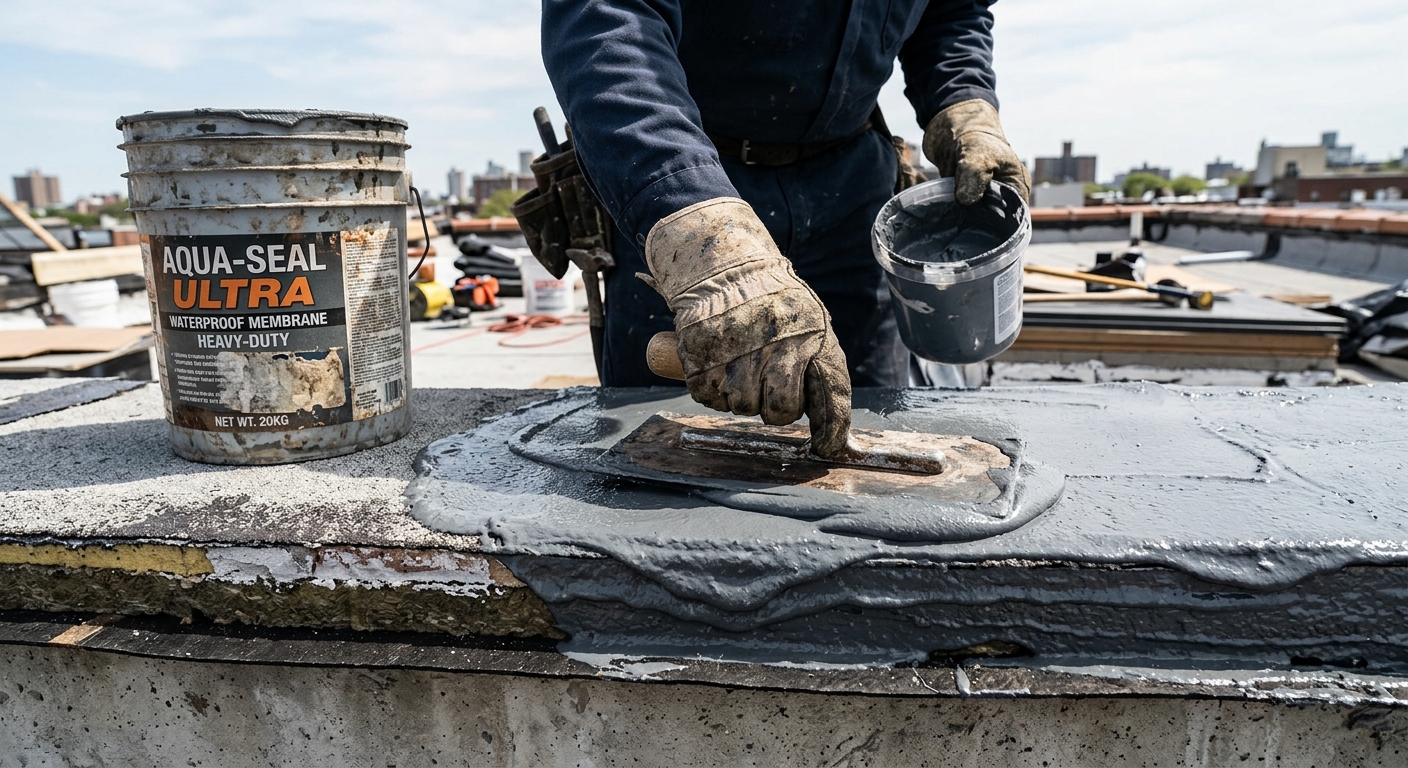
- Recoating a concrete roof — roughly RM12–RM25 per square foot depending on the system.
- Full torch-on membrane including screed to fall — RM25–RM45 per square foot.
- Rewaterproofing a bathroom with tiles removed — RM2,500–RM6,000 for a typical bathroom.
A fuller breakdown sits in our roof waterproofing cost guide. Be careful with prices far below these ranges — that usually means one thin coat with no surface preparation.
How to Stop It Returning Next Monsoon
Ceiling leaks nearly always warn you before they ruin plaster. Two short checks a year are enough to catch them.
- Clear outlets and gutters before the northeast monsoon in November, and again before the mid-year rains.
- Walk the roof two hours after rain stops. Water still standing? That is a fall problem, not a coating problem.
- Check the seams at parapets and around pipes every year — failure starts there, not in the middle of the roof.
- Keep receipts and photos. A warranty means little without a record of what was done.
If the patch is still growing this week, do not wait for the next downpour — the water getting in damages plaster and ceiling wiring. Our team inspects homes in Cheras, Kepong and across the Klang Valley, and we will tell you straight if all you need is a cleared outlet.
WhatsApp us for a site inspection and a written quote.