
7 Signs Your Roof Needs Waterproofing
Seven signs your roof needs waterproofing — from ceiling stains to parapet cracks — plus when it is time to call a waterproofing contractor in Malaysia.
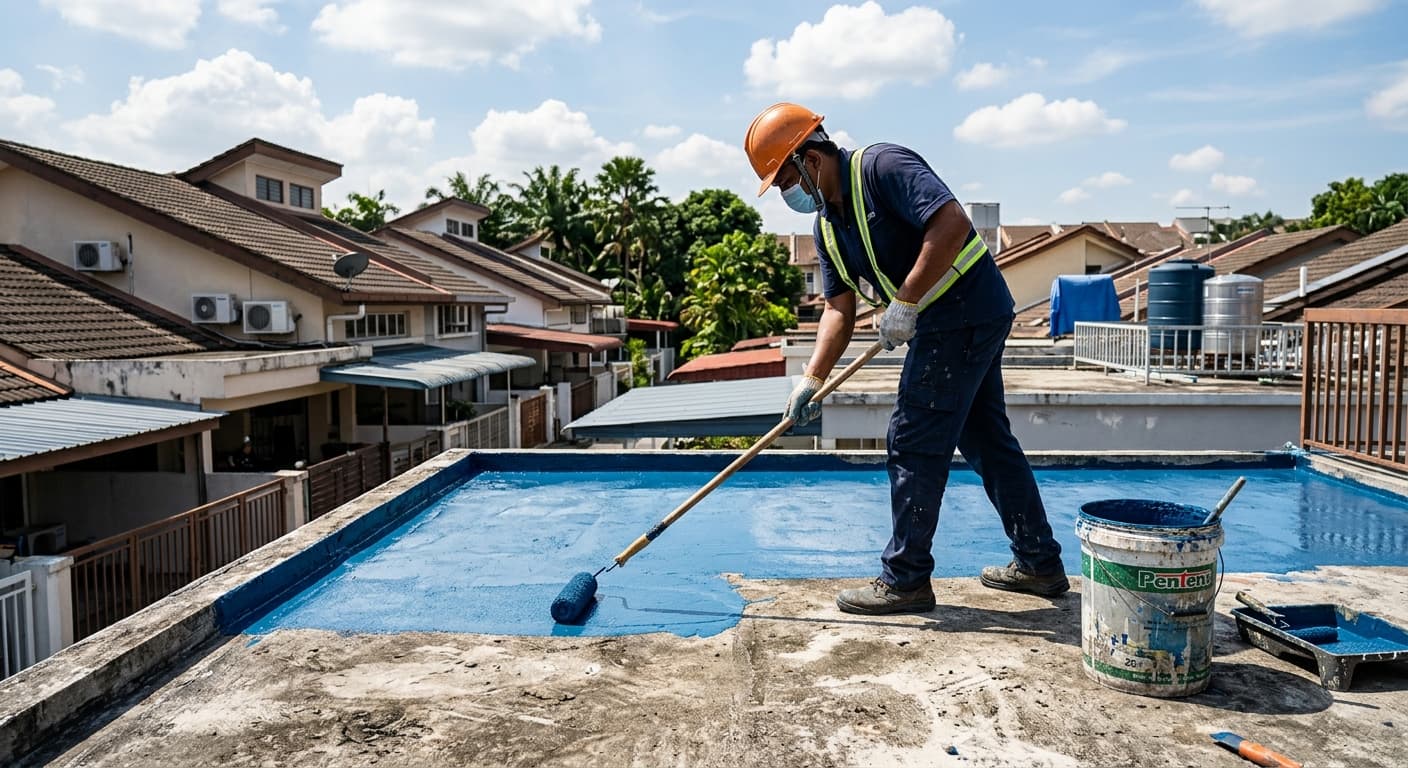
Roofs rarely start leaking overnight. They warn you six months to two years ahead — ring-shaped stains on the ceiling, white powder on the parapet wall, an old coating that begins to peel. Catch it at the warning-sign stage and roof waterproofing typically costs about half of what you pay after the gypsum ceiling collapses and the wiring has to come out. Below are the seven signs we see most often on terrace houses and flat concrete roofs across Malaysia, and what each one actually means.
7 signs your roof needs waterproofing
These are ordered from earliest to most serious. The further down the list you go, the more likely the damage has reached the concrete structure rather than just the surface layer.
1. Round or yellowish stains on the ceiling
A yellow patch with a defined edge is the clearest sign. Water has already passed the waterproofing layer and is travelling through the concrete slab. Keep in mind the stain often appears a few metres away from the actual entry point — water runs sideways on top of the slab before it finds a way down.
2. White powder (efflorescence) on walls or under the slab
Chalky white deposits mean water is moving through the concrete and carrying mineral salts out with it. This is not just cosmetic — it is proof the concrete has been wet for a long stretch of time.
3. Old waterproofing peeling or blistering
Bubbles in a membrane or coating mean the bond to the concrete is gone, usually because water vapour is trapped underneath. Patching over a blistered layer solves nothing; the old layer has to come off first.
4. Water ponding for more than an hour after rain
A flat concrete roof should have a slight fall towards the outlets. If there is still a pool sitting there at midday, the problem is the slope and drainage, not only the waterproofing. Any system laid over standing water will fail again within two or three years.
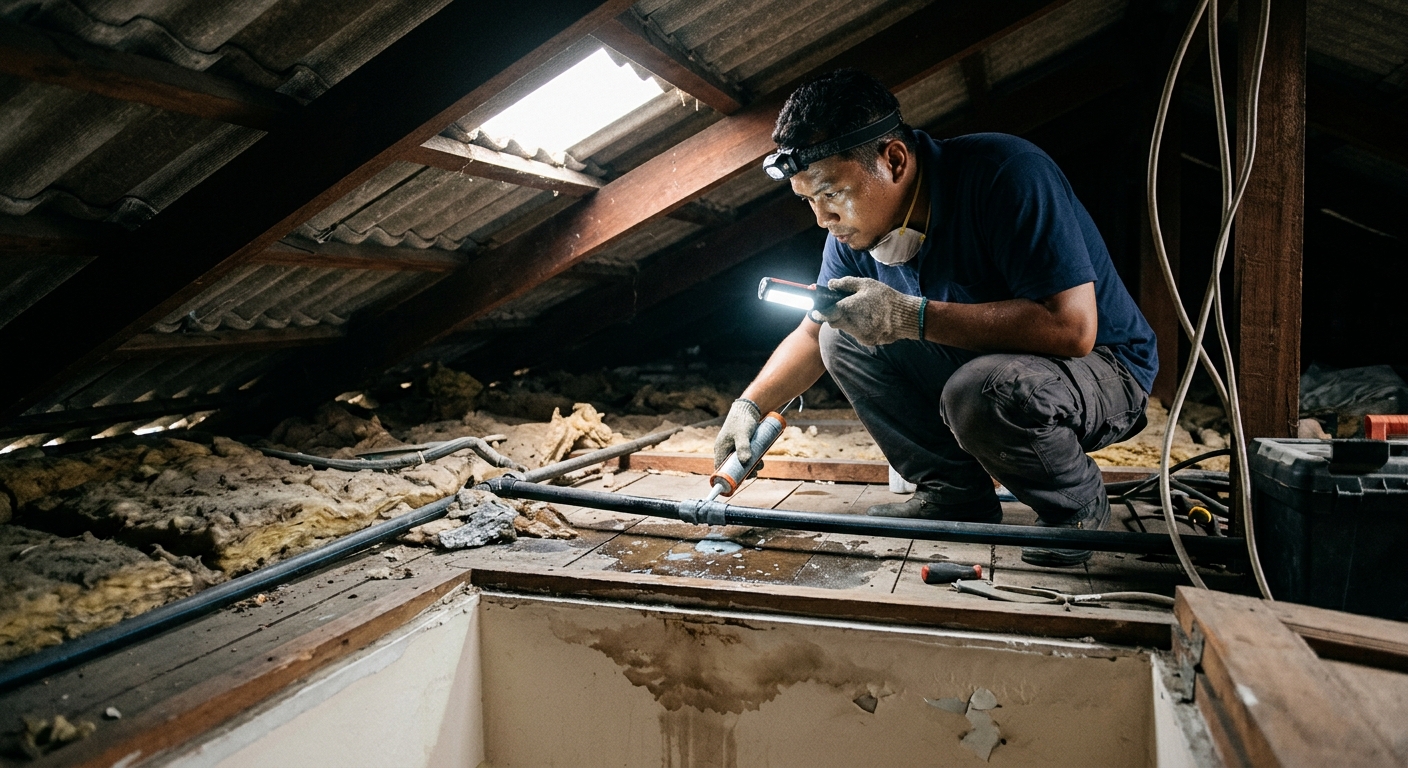
5. Hairline cracks in the slab or at the parapet junction
A crack as narrow as 0.3 mm is enough to drive water in during wind-driven rain. The joint between the slab and the parapet wall is the most common failure point, because the two surfaces move at different rates as they heat up.
6. Damp smell or black mould in upstairs corners
An earthy damp smell in an upstairs room with no visible staining means hidden moisture in the ceiling void. This is the sign most often ignored, simply because nothing looks broken yet.
7. External wall paint peeling from the bottom upwards
If exterior paint is flaking starting low down, water may be entering from above — from the roof or the parapet coping — and tracking down inside the wall. Repainting without fixing the source on the roof is money thrown away.
Why Malaysian roofs fail faster
Our climate applies two stresses at once. By midday a concrete roof surface can hit 60°C and expand; an afternoon downpour then cools it within minutes. That expand-contract cycle happens almost daily, and it is what cracks any layer that is not flexible.
Then there is the monsoon. Sustained heavy rain means water does not just land on the roof, it sits there and pushes into whatever cracks exist. That is why a system rated for 10 years in a temperate climate may only give you 5 to 7 years here.
Realistic service life
From what we see around the Klang Valley, acrylic coatings usually need recoating after 3 to 5 years, polyurethane systems last 7 to 10 years, and torch-on membrane with a protective screed can reach 10 to 15 years. A house that has never been waterproofed since it was built 15 years ago is almost certainly overdue.
Flat concrete roofs vs tiled roofs
These two roof types fail in very different ways, so the signs differ too.
Flat concrete roofs
These need waterproofing the most, because water has nowhere else to go. Usual failure points: the slab-to-parapet junction, around drain outlets, and around pipes or water-tank feet that penetrate the slab. If your house has a concrete roof over the kitchen or porch, that is where we start looking.
Tiled roofs
Tiled roofs shed water, so leaks usually come from cracked tiles, loose flashing at junctions, or valleys blocked with leaves. Here the waterproofing work concentrates on flashings, valleys and vertical wall abutments — not on coating the whole tile field.
Not sure which kind of failure you are dealing with? We run site inspections in areas like Cheras and Kepong, and our guide to why ceilings leak after rain lists the causes in more detail.
When to call a waterproofing contractor
One isolated sign that appeared after an unusually heavy storm can reasonably be monitored for a while. But two or more signs from the list above, or one sign that grows every time it rains, deserves a contractor's eyes on it.
What to ask during the inspection
Ask the contractor to show you the cause he found, not just hand over a price. Ask which system he proposes, how many coats, whether the old layer is being removed, and how the ponding test will be run before the job is signed off. A contractor who never mentions a ponding test generally will not do one.
Why it is better done before the monsoon
Almost every waterproofing system needs a dry substrate to bond to. If you wait until it rains daily, the job stalls and the leak gets worse. The drier months are the practical window, and our guide on how to choose a waterproofing contractor will help you filter the quotes you get.
Spotted any of these signs on your own roof? Send a photo of the ceiling or roof over WhatsApp and we will tell you whether it needs full work or a local patch — WhatsApp Us.
Frequently asked questions
Can I waterproof the roof myself?
A DIY acrylic coating can help on a small roof that is still in decent condition, but it will not fix structural cracks, a wrong slope, or a failed parapet junction. Those need proper surface preparation and the right material.
Does the old layer have to be removed?
If the old layer is still firmly bonded and compatible with the new system, it can sometimes be overlaid. If it is blistered, peeling, or of unknown type, take it off. Overlaying a failed layer is the single most common reason for a redo within two years.
How long does the work take?
A typical terrace house roof takes two to four days including curing time between coats. Rainy weather extends that, because each coat has to dry fully before the next goes on.
Is there a warranty?
A serious contractor gives a written 5 to 10 year warranty depending on the system. Make sure it spells out what is covered and what is not — new structural cracks, for instance, are usually excluded.